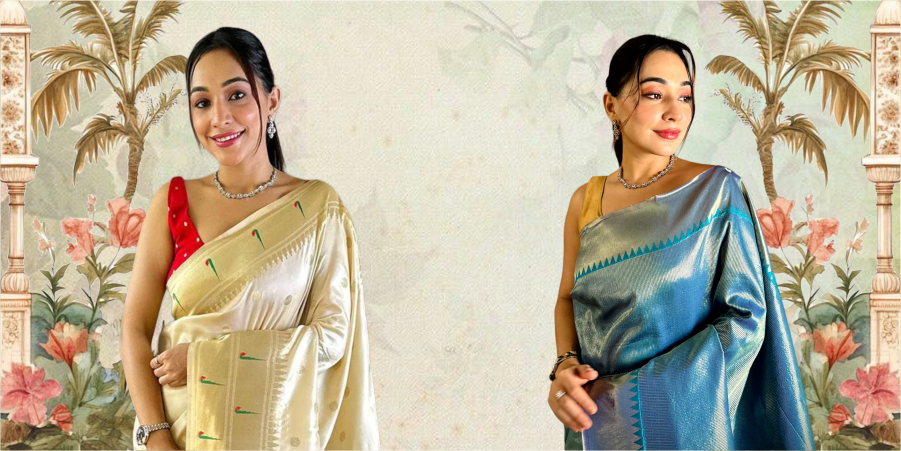
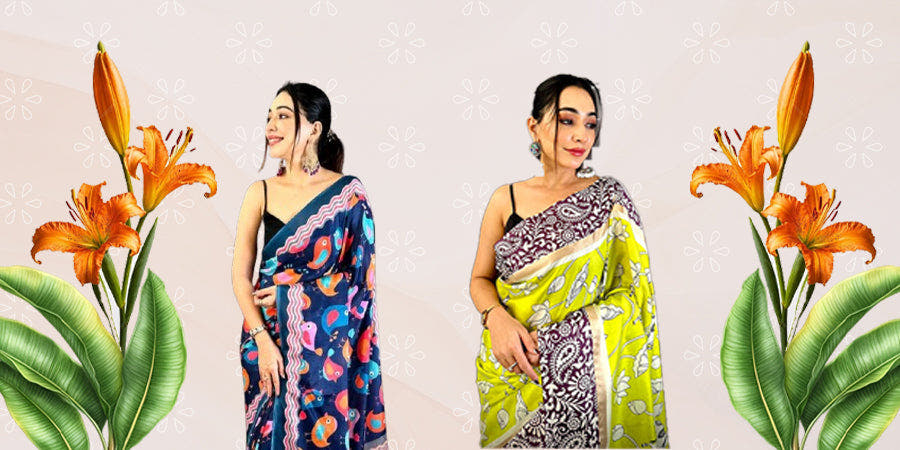
Shop our best sellers
 Pink Bandhej Printed Dola Silk Saree
₹ 750
Pink Bandhej Printed Dola Silk Saree
₹ 750
 Multi Satin Georgette Saree
₹ 1,050
Multi Satin Georgette Saree
₹ 1,050 Cream Colour Double Border Chex Weaving Banarasi Soft Silk Saree
₹ 999
Cream Colour Double Border Chex Weaving Banarasi Soft Silk Saree
₹ 999 White Soft Silk Pashmina Kashmiri Print Saree
₹ 999
White Soft Silk Pashmina Kashmiri Print Saree
₹ 999 Sky Blue Satin Georgette Saree
₹ 1,050
Sky Blue Satin Georgette Saree
₹ 1,050 Vibrant Soft Chinnon Chiffon Floral Saree
₹ 750
Vibrant Soft Chinnon Chiffon Floral Saree
₹ 750 Soft Silk Pashmina Kashmiri Print Saree
₹ 999
Soft Silk Pashmina Kashmiri Print Saree
₹ 999 Sky Blue Pochampally Patola Soft Silk Saree
₹ 1,050
Sky Blue Pochampally Patola Soft Silk Saree
₹ 1,050

A Guide to Indian Saree Weaves: From Banarasi to Kalamkari
India’s love affair with the saree is woven into its history — every region, every loom and every artisan adds a distinct chapter to this story. At Vastranand, we celebrate these chapters through our curated handloom and crafted collections. This handloom saree weave guide will walk you through the most beloved saree weaves — their history, how to spot genuine handwoven pieces, and how to care for them so they last generations.
1. Banarasi Sarees — The Epitome of Royal Craftsmanship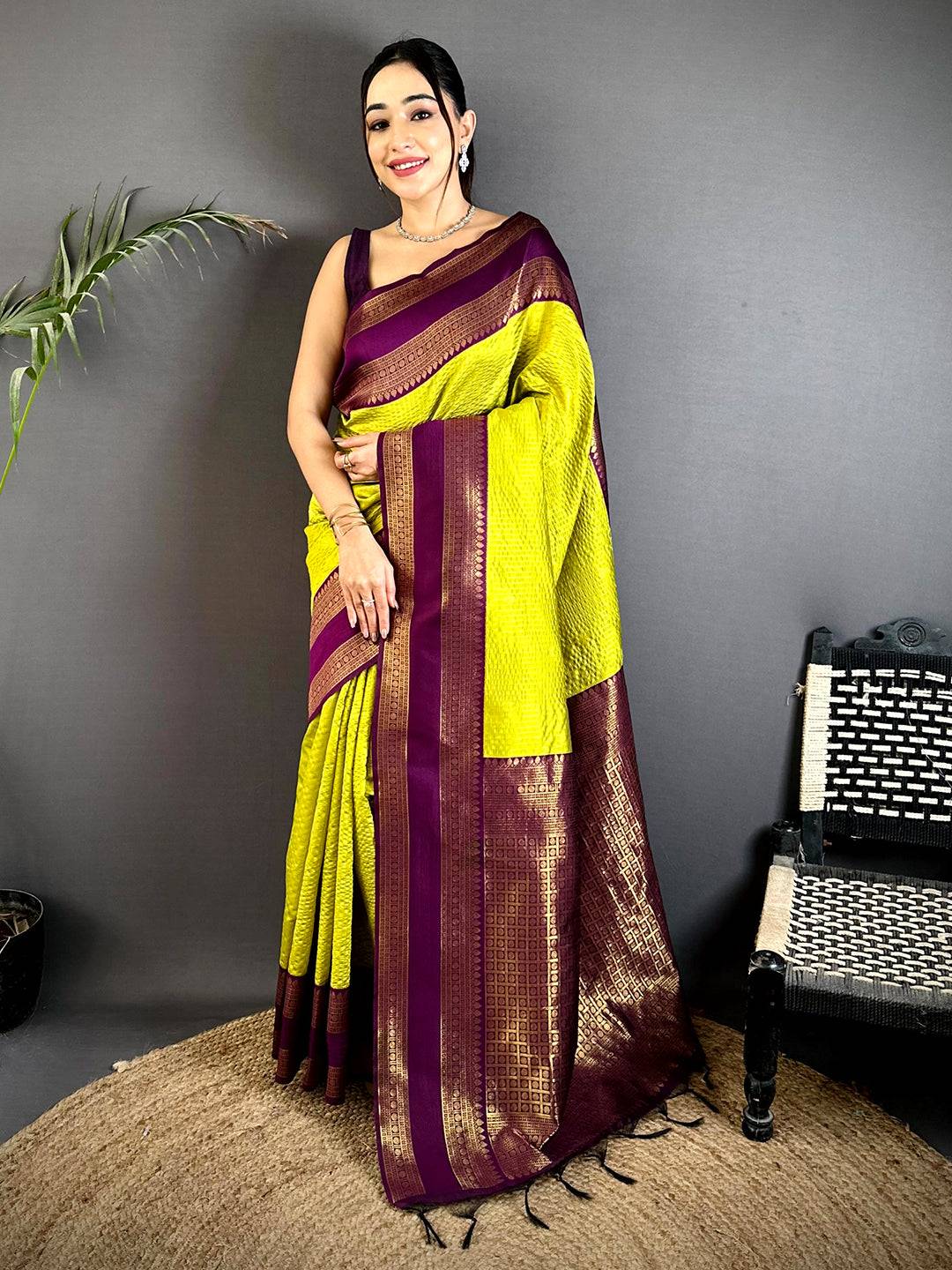
Origin: Varanasi (Banaras).
What to expect: Rich silk, metallic zari, Mughal-inspired motifs like paisleys and floral jaals, heavy brocades and bridal grandeur.
How to choose a Banarasi saree: look for dense zari work that shows on both sides of the cloth, a substantial hand-feel (silk that feels rich and heavy), and crisp, well-defined motifs. Pure handwoven Banarasis often show slight irregularities—these are signs of authenticity, not flaws.
2. Kalamkari Sarees — Storytelling with a Brush & Block
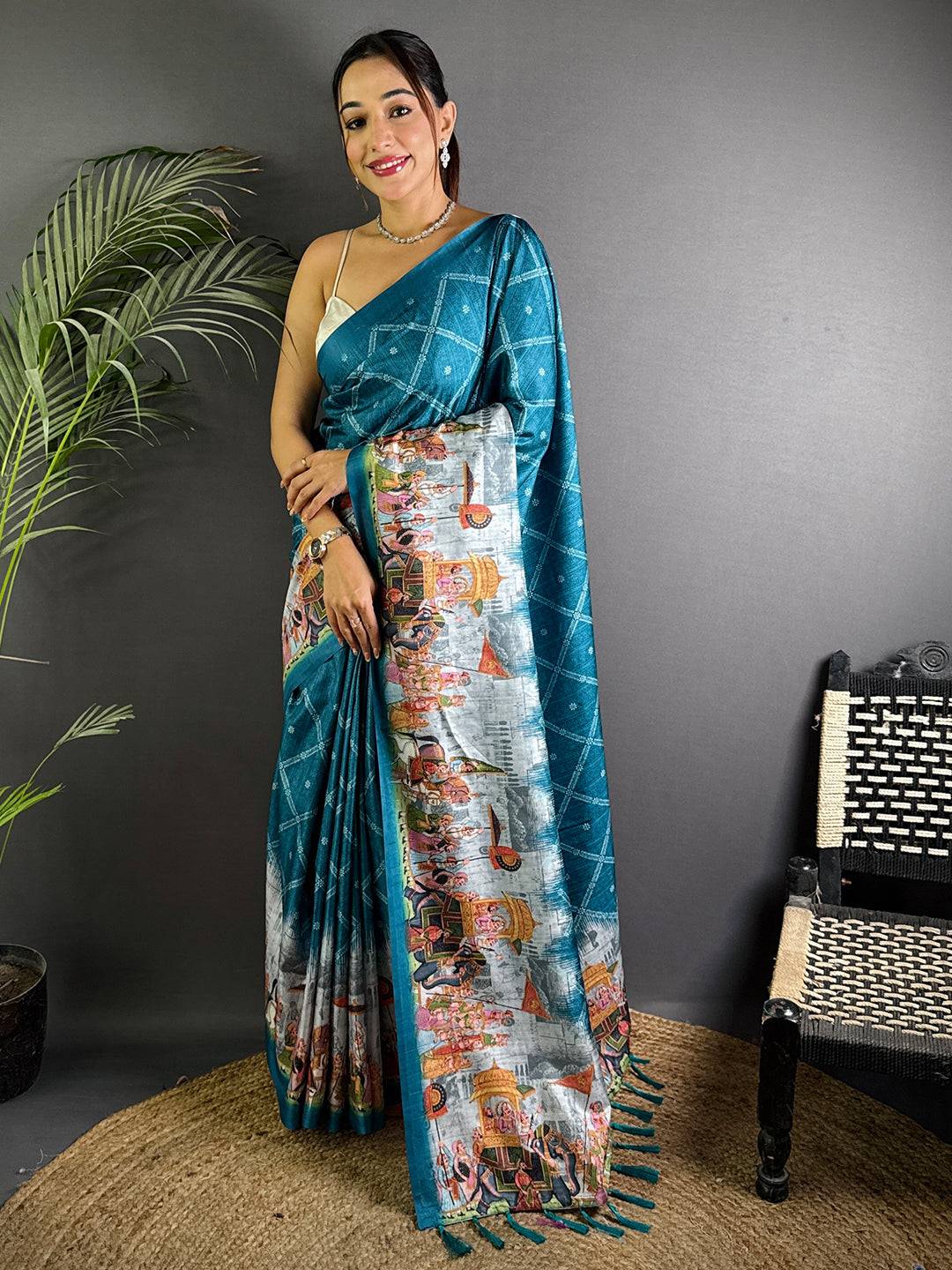
Origin: Andhra Pradesh & parts of Tamil Nadu.
What to expect: Hand-drawn (kalam) or block-printed designs, often depicting mythological scenes, flora and fauna; traditionally made using natural dyes on cotton or silk.
Spotting authenticity: natural dye tones, hand-brush strokes or irregular block impressions, and fabric that breathes the 'handcrafted' feel. Kalamkari is perfect for art-lovers and slow-fashion enthusiasts.
Care: gentle hand wash in cold water, mild detergent, dry in shade to protect natural colors.
3. Chanderi — Sheer Elegance from Madhya Pradesh
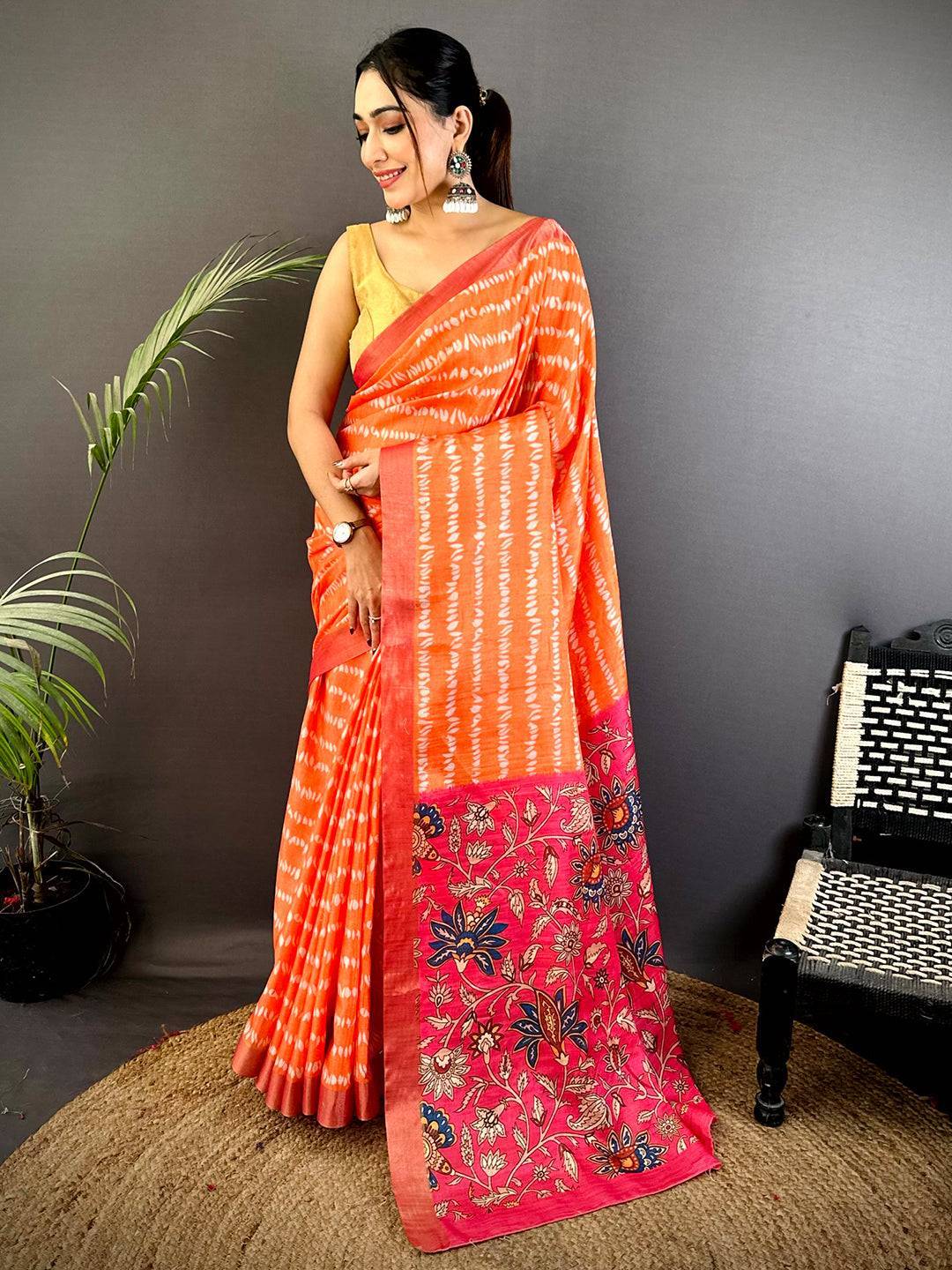
Origin: Chanderi region, Madhya Pradesh.
What to expect: Light, semi-transparent fabric — typically a silk-cotton blend — with subtle zari motifs like coins, peacocks and floral patterns. Delicate sheen and airy drape define Chanderi sarees.
How to spot real Chanderi: a soft crispness in texture, an uneven weave that indicates handloom craft, and fine zari work that blends with the body rather than sitting on top.
4. Jamdani — Floating Motifs on Fine Muslin
Origin: Bengal (especially Dhaka tradition).
What to expect: Light-as-air muslin with delicate, intricately woven motifs created using a supplementary weft technique. Each motif appears to float on the warp — poetry in weave.
Spotting authenticity: extremely fine fabric, motifs woven (not printed), and slight irregularities in motif spacing — all signs of handwork. Jamdani is often UNESCO-recognized for its cultural value.
Care: dry-clean recommended; store in muslin to protect and breathe.
5. Pattu (Silk) Sarees — The Southern Splendour
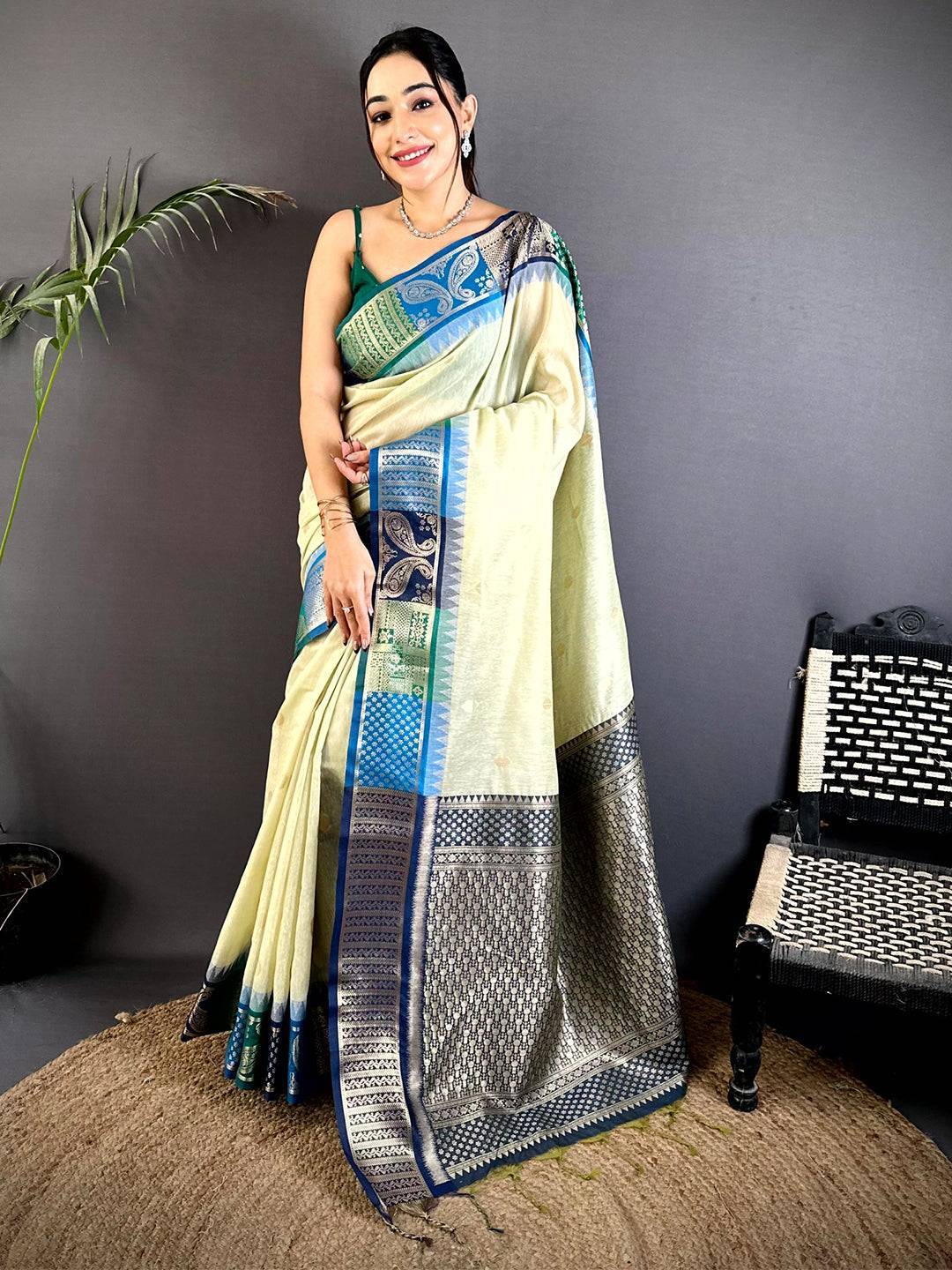
Origin: South India (Tamil Nadu, Andhra Pradesh).
What to expect: Rich mulberry silk, bold jewel tones, temple borders and gold/silver zari. Pattu sarees (often used in bridal trousseaus) are durable and heirloom-worthy.
Spotting authenticity: lustrous, heavy fabric, clearly woven zari borders and a distinct sheen that comes from quality silk yarns.
6. Organza — Modern Minimalism with a Festive Touch
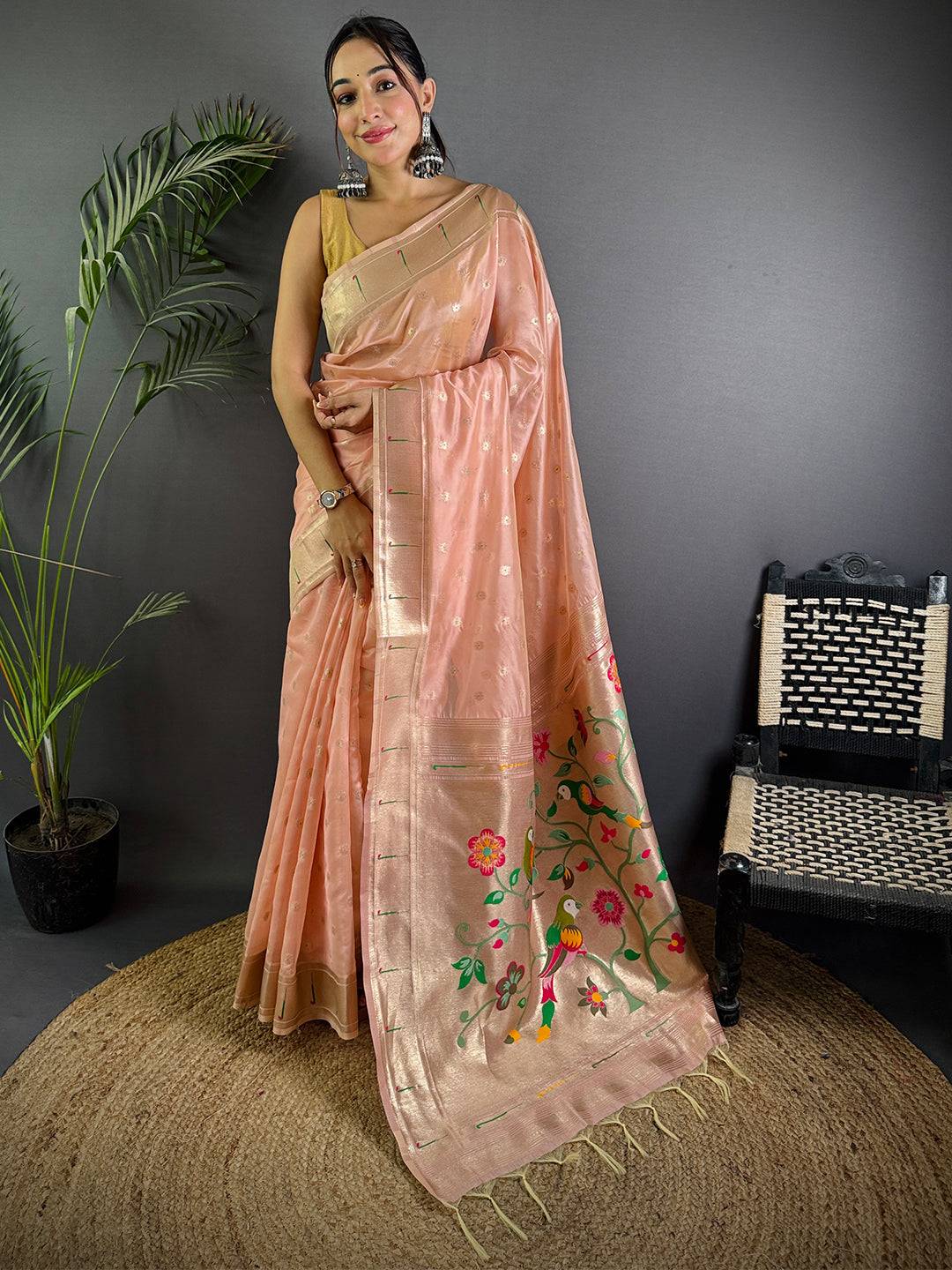
What to expect: Sheer, crisp, and lightweight with a gentle shimmer — organza is popular for contemporary and festive silhouettes. While organza is a fabric rather than a traditional handloom weave, it’s widely loved for cocktail and party wear sarees.
How to Spot Genuine Handloom & Weave Quality
- Look for irregularities: Slight slubs or unevenness in the weave mean it’s handwoven — a machine-made cloth is too uniform.
- Check the back: on quality handwoven sarees, motifs and zari work are visible and defined on both sides.
- Feel the fabric: natural fibers (cotton, silk) have warmth and slight texture; synthetics feel slick or plastic-like.
- Ask about provenance: artisan/region tags, handloom certifications or product descriptions that mention the loom and technique help ensure authenticity.
Caring for Your Handloom Sarees (Quick Guide)
- Storage: Use muslin cloth for wrapping; avoid plastic covers. Refold occasionally to prevent permanent creases on zari borders.
- Cleaning: Dry-clean pure silks and zari sarees. For cotton or Kalamkari, gentle hand wash is usually safe.
- Sunlight: Avoid prolonged direct sunlight — colors will fade faster.
- Ironing: Iron on the reverse side or use a cloth between the iron and the saree to protect delicate threads and zari.
Why Support Handloom & Artisans?
Handloom weaves are more than textiles — they’re livelihoods, culture and history stitched together. Buying handwoven sarees supports artisan communities, helps preserve specialized skills, and keeps regional textile identities alive. At Vastranand, we partner with weavers and craft communities to bring authentic pieces to modern wardrobes.
Which Saree for Which Occasion (Quick Picks)
- Weddings & ceremonies: Banarasi, Pattu (silk), richly woven Jamdani variants.
- Festivals & receptions: Chanderi, Organza, silk blends with tasteful zari.
- Daily wear & office: Cotton weaves, Chanderi, light Jamdani and printed Kalamkari.
- Brunches & day events: Floral Chanderi, light Jamdani, printed Kalamkari.
Final Thoughts
Learning how to choose a Banarasi saree or spotting an authentic Jamdani takes a few minutes of attention — but those minutes lead to lifelong pieces in your wardrobe. Each weave carries its own history and personality; choose what resonates with you. Explore, feel the fabric, ask about the loom, and cherish the story behind every saree.
✨ Explore our full range of handcrafted sarees at Vastranand.in and bring home a woven story today.
Frequently Asked Questions
How do I spot an authentic Banarasi saree?
Check for handwoven zari that shows on both sides, a rich hand-feel, and slightly irregular motifs that indicate human craftsmanship. Authentic Banarasis often have a metallic sheen and dense brocade work.
How should I care for Jamdani and other delicate handloom sarees?
Dry-clean delicate sarees like Jamdani and heavy zari pieces. For lighter cotton handlooms or Kalamkari, a gentle hand wash and shade drying is recommended. Always store in muslin cloth.
Are Kalamkari sarees only printed?
No — Kalamkari can be hand-painted (kalam) or block-printed; both are traditional techniques and prized for their craftsmanship and natural-dye palettes.
What makes Chanderi sarees different from other light weaves?
Chanderi is known for its sheer texture, lightness, and a subtle glossy finish produced by a silk-cotton blend and delicate zari motifs. The weave itself has a crispness that distinguishes it.
Shop sarees from this story
Pink Bandhej Printed Dola Silk Saree
₹ 750
Multi Satin Georgette Saree
₹ 1,050
Cream Colour Double Border Chex Weaving Banarasi Soft Silk Saree
₹ 999
White Soft Silk Pashmina Kashmiri Print Saree
₹ 999
Sky Blue Satin Georgette Saree
₹ 1,050
Vibrant Soft Chinnon Chiffon Floral Saree
₹ 750
Soft Silk Pashmina Kashmiri Print Saree
₹ 999
Sky Blue Pochampally Patola Soft Silk Saree
₹ 1,050 Classic Floral Print Chiffon Saree
₹ 1,050
Classic Floral Print Chiffon Saree
₹ 1,050
 Cream Soft Silk Kanjivaram Saree
₹ 1,450
Cream Soft Silk Kanjivaram Saree
₹ 1,450Watch these sarees in motion
Loved this story? The sarees behind it are waiting for you — handcrafted, factory-direct, delivered across India.
Shop best sellers ← Back to The Vastranand Journal