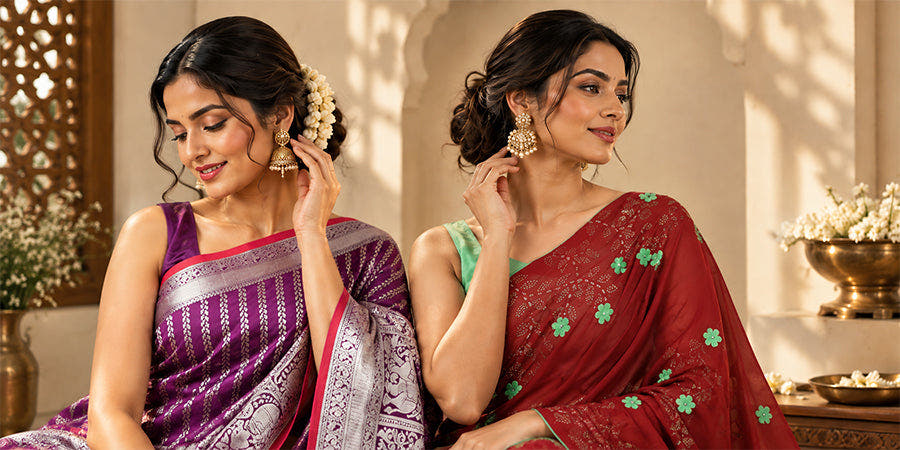
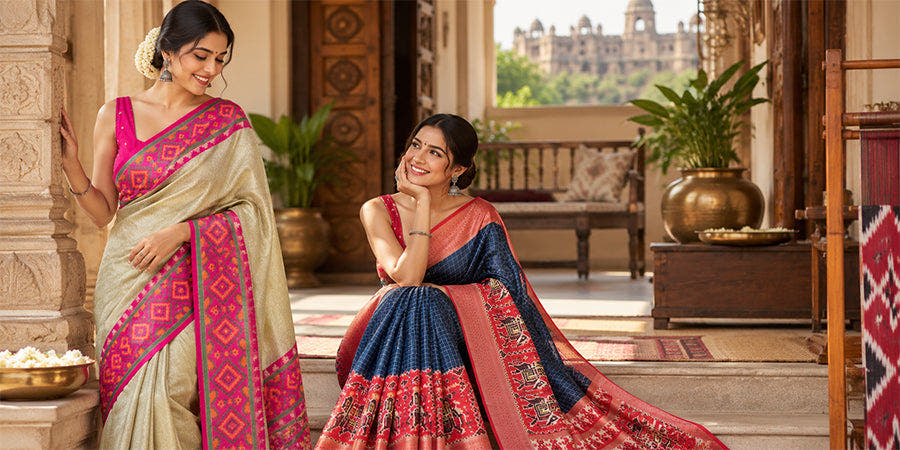
Every saree in your cupboard is a little different, and so is the way it wants to be looked after. A Kanjivaram doesn't ask for what a linen saree needs, and a delicate organza will sulk if you treat it like cotton.
Get the basics right for each fabric and your sarees will hold their colour, their zari and their shape for years. Most of these habits take just a few extra minutes, but they make the difference between a saree that lasts a decade and one that fades after a single season.
Here are 8 easy, fabric-by-fabric care tips you can start using today, whether your cupboard leans toward heavy silks or breezy everyday cottons.
1. Kanjivaram & Banarasi Silk Sarees: Keep Them Away From Direct Light
Silk weaves like Kanjivaram and Banarasi carry rich zari work that can dull or discolour with too much sunlight and humidity. Always fold them in a soft muslin or cotton cloth rather than plastic, and store them in a cool, dark corner of your cupboard.
Air them out once every few months instead of leaving them folded all year — it keeps the silk breathing and prevents permanent creases along the zari border.

Try this striped zari Kanjivaram weave, this Kanjivaram soft silk design saree, or this Kanchi-blend Banarasi saree. Browse more in Kanjivaram Sarees and Banarasi Sarees.
2. Cotton & Jamdani Handloom Sarees: Starch, Sun and a Soft Iron
Cotton and cotton-silk Jamdani sarees love a little starch — it keeps the drape crisp and the motifs looking sharp. Wash them separately in cool water for the first few washes so any loose colour doesn't run onto lighter clothes.
Dry them in shade rather than harsh sun, which can fade the base colour over time, and iron while still slightly damp for a smooth, even finish.

Some easy handloom picks: this Dhakai Jamdani cotton silk saree, this traditional yellow Jamdani saree, and this royal blue soft Jamdani silk saree. See the full range in Jamdani Sarees and Handloom Sarees.
3. Georgette & Chiffon Party Sarees: Gentle Hand Wash Only
Georgette and chiffon are light, flowy fabrics that don't cope well with a washing machine — the fibres can snag and the flow can go slack. A gentle hand wash in cool water with a mild detergent is all they need.
Skip the wringing. Instead, roll the saree in a dry towel to soak up extra water, then hang it in shade until it dries.

Look at this ribbon-embroidered georgette party saree or this Kalamkari-print georgette saree. Explore Georgette Sarees and Chiffon Sarees for more.
4. Linen Sarees: Iron Damp, Skip the Dryer
Linen creases easily, but it's also one of the most forgiving fabrics to care for. Wash it in cool water, avoid the dryer, and let it air dry flat or on a wide hanger so it doesn't stretch out of shape.
Iron it while the saree is still a little damp on a medium setting — this smooths out the crease lines without flattening the natural linen texture.

Try this trendy print soft linen saree or this Kalamkari block-print linen saree. See the full edit in Linen Sarees.
5. Organza & Tissue Sarees: Handle the Delicate Ones With Care
Organza and tissue sarees are sheer and lightweight, and they show crease marks more than most other fabrics. Store them rolled loosely around a cardboard tube, or folded along soft lines rather than sharp ones, to avoid permanent lines.
A professional dry clean is the safest choice for these, especially if there's zari or metallic thread woven through the fabric.

Consider this soft organza digital print saree, this organza party wear saree, or this Banarasi Katan tissue silk saree. Browse Tissue Sarees for more options.
6. Bandhani & Leheriya Sarees: Protect the Tie-Dye Pattern
Bandhani and leheriya sarees are dyed by hand, so the first wash matters most. Wash separately in cold water with a mild soap to check for any colour bleed before it ever meets your other clothes.
After that, dry them in shade and avoid harsh detergents, which can slowly fade the vivid tie-dye pattern that makes these sarees so special.

Some pretty picks: this foil and Bandhej print festive saree, this lace-border Bandhej print saree, and this woven viscose saree with Bandhej motifs. Explore Bandhani Sarees and Leheriya Sarees.
7. Hand-Embroidered & Zari Work Sarees: Wrap, Don't Fold Tight
Sarees with hand embroidery, stone work or sequins need a little extra thought in storage. Wrap them loosely in muslin or soft tissue paper instead of folding tightly, so the threadwork and embellishments don't crush or catch on each other.
Keep them away from moisture and perfume sprays, both of which can tarnish zari and metallic thread over time.

Have a look at this stone work party wear saree or this sequence work net saree. More in Hand Embroidery Sarees.
8. Every Saree: Rotate Your Folds and Skip the Plastic
Whatever the fabric, one habit helps every saree in your collection: refold it differently every few months. The same fold line, repeated for years, can weaken the fabric permanently along that crease.
Store sarees in breathable cotton bags rather than plastic covers, which trap moisture, and slip in a few neem leaves or silica gel packets to keep insects and dampness away.

Ready to add a few new drapes to that well-organised cupboard? Explore Wedding Sarees and Party Sarees for pieces worth caring for.
Why Shop Sarees at Vastranand
Vastranand sarees come to you through a factory-to-customer (F2C) model, which means you get the weave and the finish without the usual layers of middlemen. Over 1 million happy customers across India already shop with us, and we ship with cash on delivery available nationwide.
If a saree doesn't feel right once it arrives, our easy returns process makes it simple to exchange or send it back — so you can shop your favourite fabrics with confidence.
Frequently Asked Questions
Q: How often should I take my sarees out of storage?
A: Every 2–3 months is a good rhythm. Airing them out and refolding along new lines prevents permanent creases and keeps the fabric healthy.
Q: Can I wash silk sarees like Kanjivaram at home?
A: It's safest to dry clean silk sarees, especially ones with heavy zari work, since home washing can affect the sheen and the border.
Q: What's the best way to store zari and embroidered sarees?
A: Wrap them in muslin or soft tissue paper rather than folding them tightly, and keep them away from moisture and direct sunlight.
Q: Why do Bandhani sarees need a separate first wash?
A: The tie-dye process can leave a little loose colour after dyeing, so an early separate wash in cold water keeps that colour from transferring to other clothes.
Q: Is plastic packaging safe for long-term saree storage?
A: Not ideally — plastic traps moisture, which can lead to mildew or yellowing. Cotton or muslin bags let the fabric breathe.
Q: Do I need different care for everyday cotton sarees versus festive silk ones?
A: Yes. Everyday cottons can handle a light hand wash at home, while festive silks with heavy zari or embroidery are best left to a trusted dry cleaner.
Whether it's a Kanjivaram you're saving for the next wedding or a cotton Jamdani you reach for every week, a little care goes a long way. Explore the full range of sarees at Vastranand and find your next favourite drape — one you'll be happy to look after for years to come.
Shop sarees from this story
 Stylish Peach Colour Woven Design Cotton Saree
₹ 1,795
Stylish Peach Colour Woven Design Cotton Saree
₹ 1,795 Stylish Pista Colour Woven Design Cotton Saree
₹ 1,795
Stylish Pista Colour Woven Design Cotton Saree
₹ 1,795 Stylish Black Colour Woven Design Cotton Saree
₹ 1,795
Stylish Black Colour Woven Design Cotton Saree
₹ 1,795 Stylish Orange Colour Woven Design Cotton Saree
₹ 1,795
Stylish Orange Colour Woven Design Cotton Saree
₹ 1,795 Bollywood Mauve Colour Woven Design Cotton Saree
₹ 1,795
Bollywood Mauve Colour Woven Design Cotton Saree
₹ 1,795 Bollywood Black Colour Woven Design Cotton Saree
₹ 1,795
Bollywood Black Colour Woven Design Cotton Saree
₹ 1,795 Bollywood Orange Colour Woven Design Cotton Saree
₹ 1,795
Bollywood Orange Colour Woven Design Cotton Saree
₹ 1,795 Trendy Black Colour Saree Adorned with Printed Border
₹ 1,495
Trendy Black Colour Saree Adorned with Printed Border
₹ 1,495 Stylish Cotton Blend Woven Design Saree
₹ 1,795
Stylish Cotton Blend Woven Design Saree
₹ 1,795 Bollywood Peach Colour Woven Design Cotton Saree
₹ 1,795
Bollywood Peach Colour Woven Design Cotton Saree
₹ 1,795Watch these sarees in motion
Loved this story? The sarees behind it are waiting for you — handcrafted, factory-direct, delivered across India.
Shop best sellers ← Back to The Vastranand Journal