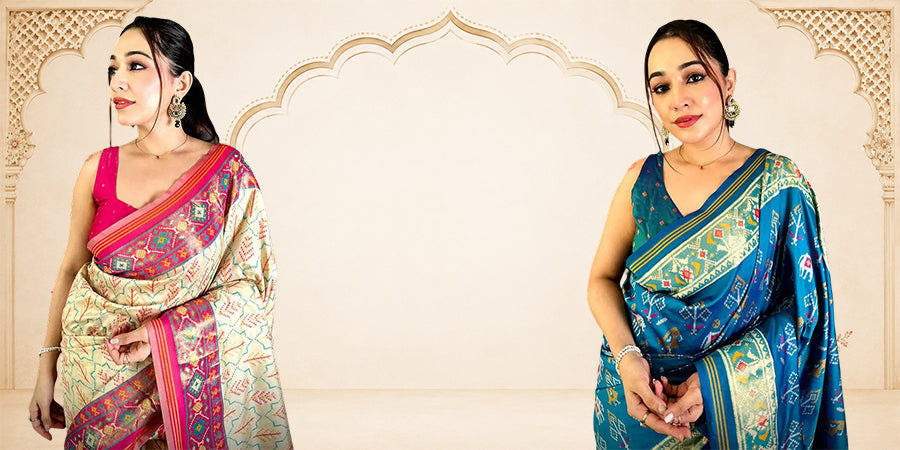
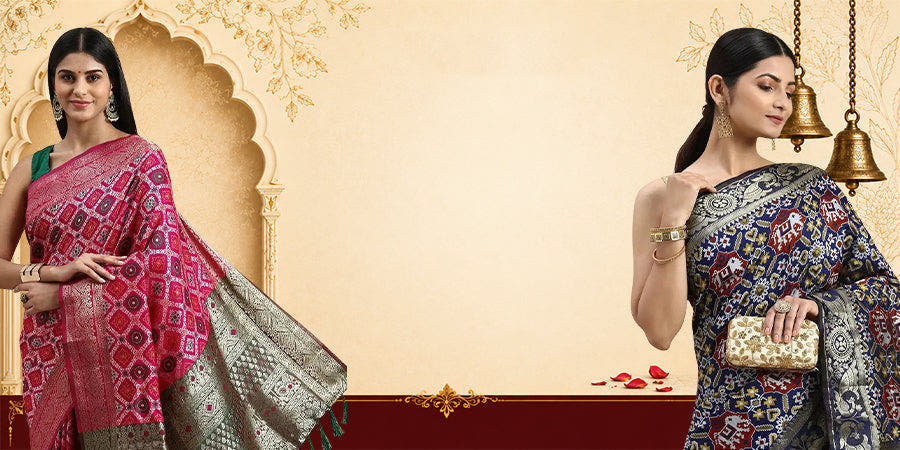
Shop Festive Sarees
 Off White Ethnic Motif Silk Blend Saree
₹ 1,995
Off White Ethnic Motif Silk Blend Saree
₹ 1,995 White Soft Silk Pashmina Kashmiri Print Saree
₹ 999
White Soft Silk Pashmina Kashmiri Print Saree
₹ 999 Pink Bandhej Printed Dola Silk Saree
₹ 750
Pink Bandhej Printed Dola Silk Saree
₹ 750
 Baby Pink Soft Silk Kanjivaram Saree
₹ 1,550
Baby Pink Soft Silk Kanjivaram Saree
₹ 1,550 Soft Silk Pashmina Kashmiri Print Saree
₹ 999
Soft Silk Pashmina Kashmiri Print Saree
₹ 999 Pink Banarasi Silk Gadwal Pattu Saree
₹ 1,250
Pink Banarasi Silk Gadwal Pattu Saree
₹ 1,250 Sky Blue Pochampally Patola Soft Silk Saree
₹ 1,050
Sky Blue Pochampally Patola Soft Silk Saree
₹ 1,050 Mustard Poly Chiffon Diamond Stone Work Saree
₹ 1,050
Mustard Poly Chiffon Diamond Stone Work Saree
₹ 1,050
Maharashtra has given India some of its most graceful saree traditions — the peacock-bordered Paithani, the temple-inspired Narayanpet weave, and the crisp nine-yard nauvari drape worn at weddings and pujas for generations. Whether you're dressing for Ganesh Chaturthi, a Maharashtrian wedding, or simply want a saree with real heritage behind it, this guide walks you through the styles worth adding to your wardrobe, along with how to wear and care for them.
1. Paithani Silk Sarees – Maharashtra's Signature Weave
The Paithani is Maharashtra's most iconic saree, instantly recognised by its vibrant silk body and richly woven pallu. Originating in the town of Paithan near Aurangabad, it has been woven for centuries and is prized for its Minakari borders — enamel-style colourwork woven directly into the fabric rather than printed on. The soft silk base gives it a graceful fall, which is why it remains the first choice for Maharashtrian brides, mothers-of-the-bride and festival dressing alike.
Vastranand's Black Yevla Paithani Minakari Silk Saree and Blue Yevla Paithani Minakari Silk Saree are lovely places to start exploring the weave. You can browse many more shades and border patterns in the full Paithani Sarees collection.

2. Minakari Border Paithani for Wedding Season
Reds, maroons and deep wine tones are the traditional bridal shades of Maharashtra, and a Minakari-bordered Paithani in these colours works beautifully for wedding functions, the varmala ceremony, or as a wedding-guest saree. The rich, multicoloured border does most of the styling work, so you barely need extra embellishment to look festive and complete.
Try the Red Yevla Paithani Minakari Silk Saree, the Maroon Yevla Paithani Minakari Silk Saree, or the Burgundy Yevla Paithani Silk Saree for your next wedding function. Explore more bridal-ready options in the Wedding Sarees collection.

3. Peacock & Coin Motif Paithani for Festive Days
The peacock (mor) and coin (ashrafi) motifs are two of the most loved Paithani border patterns, symbolising grace and prosperity respectively. Woven into the pallu and border in contrasting zari, they turn a simple silk saree into a statement piece that needs very little additional jewellery to shine at a festive gathering.
Look at the Black Peacock Motif Paithani Silk Saree, the Indigo Peacock Motif Paithani Silk Saree, and the Red Peacock Motif Paithani Silk Saree for a festive edit that leans traditional.

4. Pastel Paithani for Daytime Celebrations
Not every Maharashtrian occasion calls for bold bridal colour. Soft pista, rama green and dusty pink Paithanis are ideal for daytime haldi functions, morning aartis, or a family lunch where you want to look festive but understated rather than bridal-heavy.
Consider the Green Yevla Paithani Minakari Silk Saree, the Lime Yevla Paithani Minakari Silk Saree, or the Rama Green Yevla Paithani Silk Saree for a softer festive palette.

5. Narayanpet-Style Kanjivaram Blend Sarees
Popular along the Maharashtra-Telangana-Karnataka border, Narayanpet sarees bring together a Kanjivaram-inspired zari border with a soft, easy-to-drape silk body. Many Maharashtrian households keep these as everyday festive staples alongside their Paithanis, since the weave is a little lighter and easier to manage through a long day of pooja or travel.
The Bottle Green Aura Soft Silk Saree with Kanjivaram Weaving and the Navy Aura Soft Silk Saree with Kanjivaram Weaving are great picks, and you'll find more in the Narayanpet saree collection.

6. Budget-Friendly Yevla Paithani Silk Sarees
Building a Maharashtrian saree wardrobe doesn't have to be expensive. The Yevla weaving cluster near Nashik also produces lighter, more affordable Paithani silk sarees that keep the classic zari border and glossy finish without the price tag of a hand-loomed heirloom piece.
The Yellow Yevla Paithani Minakari Silk Saree, the Red Yevla Paithani Minakari Silk Saree, and the Orange Yevla Paithani Soft Silk Saree are gentle on the pocket while staying true to the weave.

7. Paithani for Ganesh Chaturthi & Everyday Pujas
Come Ganesh Chaturthi, most Maharashtrian homes reach for a Paithani for the sthapana, aarti and visarjan days. A woven zari border in a warm marigold or maroon shade photographs beautifully against the flowers, modak thalis and diyas of the puja setup, and the fabric holds up well through a day of standing and moving between rooms.
The Orange Peacock Motif Paithani Silk Saree and the Black Yevla Paithani Soft Silk Saree are festive-ready picks, and the full Festive Sarees collection has many more options for the season.

8. Nauvari Draping – Styling the Traditional Maharashtrian Way
The nauvari, or nine-yard drape, is the traditional Maharashtrian style worn without a petticoat, pleated at the front and tucked at the back so it falls like a dhoti. While most women today wear their Paithani or Narayanpet saree in the standard five-yard style for everyday convenience, keeping a nauvari drape for weddings, folk performances or Gudi Padwa is a lovely way to honour the tradition.
Pair your drape with a nath (nose ring), a set of green glass bangles and a jasmine gajra in your hair for the complete look. A soft silk saree holds pleats especially well for this style.

9. Caring for Your Paithani and Narayanpet Sarees
Soft silk Paithani and Narayanpet sarees deserve gentle handling to keep their zari borders bright for years. Always dry clean them rather than washing at home, store them wrapped in muslin cloth away from direct sunlight, and refold along different lines every few months so the silk doesn't crease permanently at the same spots.
If you're just starting your collection, the Pista Yevla Paithani Silk Saree and the Wine Aura Soft Silk Saree with Kanjivaram Weaving are both easy, low-maintenance pieces to begin with.

Why Shop Sarees at Vastranand
Vastranand sells sarees factory-direct through its F2C (factory-to-customer) model, cutting out middlemen so you get genuine weaves at honest, factory-direct prices. Founded in 2017 in Surat by brothers Jigar and Ravi Viradiya, the brand has now served over 1 million happy customers across India. Every order ships with cash on delivery and easy returns, so you can build your Maharashtrian saree collection with confidence.
Frequently Asked Questions
1. What makes a Paithani saree different from other silk sarees?
A Paithani is handwoven in Maharashtra with a distinctive Minakari border, and motifs like peacocks and coins are woven directly into the fabric rather than printed or embroidered on afterward.
2. Can I wear a Paithani saree for a wedding?
Yes. Paithani sarees in red, maroon or wine with a rich zari border are considered classic Maharashtrian bridal and wedding-guest choices.
3. What is a Narayanpet saree?
It's a soft silk saree with a Kanjivaram-inspired zari border, popular along the Maharashtra-Karnataka-Telangana border and often worn as an everyday festive saree.
4. How do I drape a nauvari saree?
The nauvari uses nine yards of fabric pleated and tucked to fall like a dhoti, without a petticoat. It takes a little practice, so many women ask a family elder or a professional draper to help the first time.
5. Does Vastranand offer cash on delivery on Maharashtrian sarees?
Yes, Vastranand offers COD across India along with easy returns on all orders, including its Paithani and Narayanpet saree collections.
Ready to add a piece of Maharashtrian heritage to your wardrobe? Explore the full Paithani Sarees collection at Vastranand and find the weave that speaks to you.
Shop sarees from this story
Off White Ethnic Motif Silk Blend Saree
₹ 1,995
White Soft Silk Pashmina Kashmiri Print Saree
₹ 999
Pink Bandhej Printed Dola Silk Saree
₹ 750
Baby Pink Soft Silk Kanjivaram Saree
₹ 1,550
Soft Silk Pashmina Kashmiri Print Saree
₹ 999
Pink Banarasi Silk Gadwal Pattu Saree
₹ 1,250
Sky Blue Pochampally Patola Soft Silk Saree
₹ 1,050
Mustard Poly Chiffon Diamond Stone Work Saree
₹ 1,050 Eye-Catching Gadwal Soft Silk Festive Wear Saree
₹ 1,695
Eye-Catching Gadwal Soft Silk Festive Wear Saree
₹ 1,695 Peach Ombre Chinnon Chiffon Floral Print Saree with Pink Pallu
₹ 750
Peach Ombre Chinnon Chiffon Floral Print Saree with Pink Pallu
₹ 750Watch these sarees in motion
Loved this story? The sarees behind it are waiting for you — handcrafted, factory-direct, delivered across India.
Shop best sellers ← Back to The Vastranand Journal