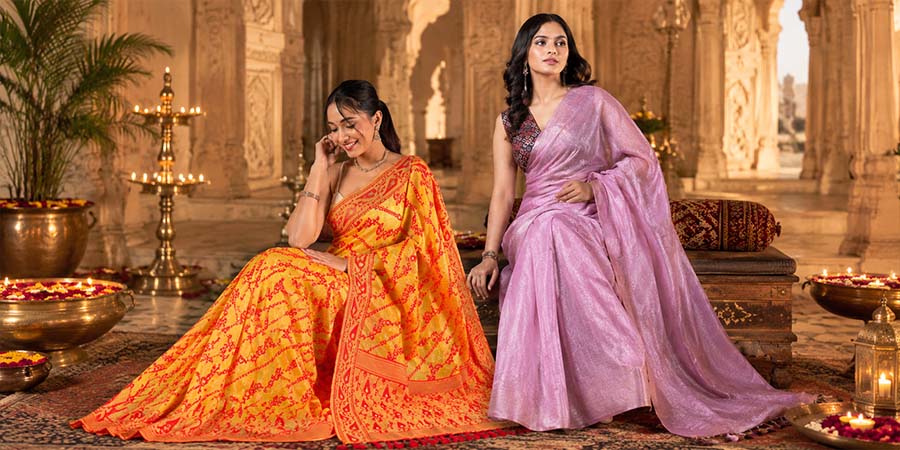
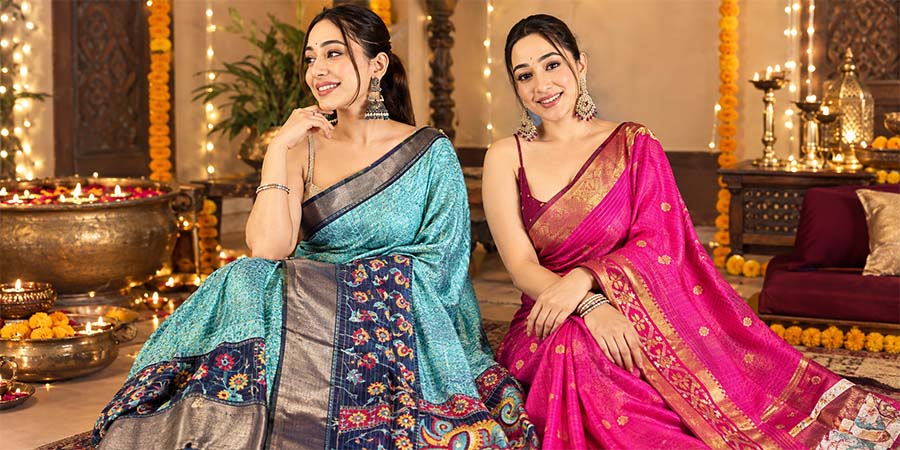
A saree is one length of cloth, but India never wraps it just one way. Travel from Kolkata to Kerala and the same six yards turns into a completely different silhouette — a different pleat count, a different pallu, a different story. Here are 9 traditional saree draping styles from across India, and the Vastranand sarees that suit each one beautifully.
1. Nivi Drape: The Everyday Foundation
The Nivi drape, which originated in Andhra Pradesh, is the style most of India wears today — pleats tucked in front, pallu draped over the left shoulder. It works with almost any fabric, which is why it is the safest starting point if you are new to saree draping.
A soft, fluid georgette holds pleats well without feeling stiff, making it ideal for practising this drape.

Try it with the Soft Poly Georgette Designer Digital Kalamkari Print Saree or the Red Colour Ribbon Poly Georgette Party Wear Saree from our Georgette Sarees collection.
2. Bengali Atpoure Drape: Wide Pleats and a Broad Pallu
The Bengali drape skips the front pleats altogether. Instead, the pallu is brought around twice, wrapped broad across the chest, and finished with a set of keys traditionally tucked into the waist. It is unmistakable at any Durga Puja or Bengali wedding.
A crisp Jamdani, Bengal's own handloom weave, is the most authentic fabric choice for this drape — its texture holds the wide pallu fold beautifully.

Shop the Royal Blue Soft Dhakai Jamdani Silk Saree and the Traditional Yellow Dhakai Jamdani Saree, or browse the full Jamdani Sarees collection.
3. Gujarati Seedha Pallu Drape: Pallu Draped Forward
In Gujarat and parts of Rajasthan, the pallu is brought from the back over the right shoulder and left to fall open in front, over the arm, instead of behind the back. It shows off the border and pallu work beautifully, which is exactly why brides and garba dancers favour it.
Bandhani sarees, with their tie-dye dots and vivid colour blocking, were practically made for this front-facing drape.

Try the Poly Chiffon Foil & Bandhej Print Saree in Green or the Poly Chiffon Foil & Bandhej Print Lace Border Saree.
4. Maharashtrian Nauvari Drape: Nine Yards of Freedom
The Nauvari, or Kashta, drape uses a longer nine-yard saree draped between the legs like a dhoti, leaving both hands and feet completely free. It began as workwear for Maratha women and is still worn with pride at Gudi Padwa and traditional Maharashtrian weddings.
A Paithani saree, with its glowing silk and peacock-motif pallu, is the fabric this drape was designed to showcase.

Explore the Yevla Paithani Minakari Work Silk Saree in Red and the Yevla Paithani Minakari Work Silk Saree in Green from our Paithani Sarees collection.
5. Tamil Madisar Drape: The Temple-Ready Wrap
The Madisar, worn by Tamil Brahmin women, is a nine-yard drape tucked in a distinctive pleated fold at the back, often paired at temple functions and weddings. It takes practice, but the finished look is one of quiet, dignified elegance.
A rich Kanjivaram, with its heavy zari border and temple motifs, is the traditional saree of choice for this style.

Shop the Striped Woven Design Zari Silk Blend Kanjivaram Saree in Wine or the Striped Woven Design Zari Silk Blend Kanjivaram Saree in Maroon, and browse more in the Kanjivaram Sarees collection.
6. Coorgi Drape: Pallu Pinned With Pride
Women of Coorg (Kodagu) in Karnataka drape the saree with the pleats at the back instead of the front, and the pallu pinned neatly over the right shoulder rather than the left. It is one of the few drapes where the pallu is fastened rather than left loose, giving it a tailored, structured look.
A woven silk saree with a well-defined border works best here, since the border sits visibly at the back pleats.

Try the Soft Silk Woven Design Zari Kanchi Blend Banarasi Saree in Red or the Designer Soft Silk Woven Zari Kanchi Blend Banarasi Saree in Navy.
7. Rajasthani Drape: Desert Colour in Motion
Rajasthani women often wear the saree with a shorter, gathered pallu pulled snugly over the head, letting the vivid tie-dye patterns of the fabric take centre stage against the desert landscape. It is a drape built for movement — think garba nights and Teej celebrations.
Leheriya, Rajasthan's signature wave-pattern weave, is the fabric this drape is named for.

Shop the Leheriya Soft Georgette Digital Print Saree and the Leheriya Soft Georgette Digital Print Saree in Peach, or explore the Rajasthani Sarees collection.
8. Kerala-Inspired Drape: Cream, Cotton and Calm
Kerala's traditional two-piece mundum neriyathum inspired a single-saree version worn in soft, unbleached cream and white cotton, with the pallu pleated neatly and pinned at the shoulder. The palette is deliberately understated, letting a simple gold border do all the talking.
A cream or white cotton-silk saree captures this calm, minimal aesthetic perfectly for daytime pujas or Onam-style festivities.

Try the White Dhakai Jamdani Cotton Silk Saree or the Cream Soft Cotton Silk Jamdani Saree.
9. Modern Butterfly Drape: Red-Carpet Ready
Popularised by Bollywood stylists, the butterfly drape uses extra-deep pleats and a dramatically flared pallu, sometimes pinned in soft waves for a fan-like fall. It has no regional roots, but it has become the go-to choice for receptions, cocktail parties and red-carpet moments.
A flowy chiffon drapes into soft, cascading waves without adding bulk, which is exactly what this drape needs.

Shop the Lavender Colour Chiffon Dual Tone Party Wear Saree or the Navy Colour Chiffon Dual Tone Party Wear Saree from our Party Wear collection.
Why Shop Sarees at Vastranand
Founded in Surat in 2017 by brothers Jigar and Ravi Viradiya, Vastranand has grown into a name over one million happy customers trust. Our factory-to-customer (F2C) model cuts out the middlemen, so every saree — from a Jamdani to a Paithani — reaches you at a genuinely factory-direct price without compromising on craft.
We ship across India with cash on delivery, and every order comes with easy returns, so you can try a new drape without a second thought.
Frequently Asked Questions
Which saree drape is easiest for beginners?
The Nivi drape is the simplest place to start. It works with most fabrics and is the drape most saree tutorials teach first.
Which fabric is best for regional drapes like Nauvari or Madisar?
Silk sarees such as Paithani or Kanjivaram hold their shape and pleats far better than very lightweight fabrics, which matters for structured drapes.
Can I wear the Bengali or Gujarati drape with any saree?
You can, but drapes look most authentic in the fabric they originated in — Jamdani for Bengali style, Bandhani for Gujarati style — because the weave and border are designed to show at exactly the right fold.
Do I need a separate petticoat or blouse for different drapes?
Most drapes work with a standard petticoat and fitted blouse. Structured drapes like Nauvari or Madisar are easier with a slightly longer petticoat for a cleaner finish.
How do I keep pleats from coming loose through the day?
Pin the pallu at the shoulder and secure the front pleats at the waist with a safety pin. Softer fabrics like chiffon and georgette hold pleats especially well.
Ready to try a new drape? Explore our full Festive Sarees collection and find the saree that suits your style best.
Shop sarees from this story
 Stylish Linen Printed Bandhani Saree with Resham Tassel
₹ 1,495
Stylish Linen Printed Bandhani Saree with Resham Tassel
₹ 1,495 Georgette Green Colour Saree With Mirror Work & Bandhani Print
₹ 595
Georgette Green Colour Saree With Mirror Work & Bandhani Print
₹ 595 Woven Printed Viscose Saree With Bandhej Motifs
₹ 1,850
Woven Printed Viscose Saree With Bandhej Motifs
₹ 1,850 Red Colour Poly Chiffon Bandhej Print & Embellished Border Saree
₹ 2,445
Red Colour Poly Chiffon Bandhej Print & Embellished Border Saree
₹ 2,445 Poly Chiffon Foil Print & Bandhej Print Red Colour Saree
₹ 2,445
Poly Chiffon Foil Print & Bandhej Print Red Colour Saree
₹ 2,445 Poly Chiffon Foil & Bandhej Print Lace Border Saree
₹ 2,445
Poly Chiffon Foil & Bandhej Print Lace Border Saree
₹ 2,445 Poly Chiffon Foil & Bandhej Print Green Colour Saree
₹ 2,445
Poly Chiffon Foil & Bandhej Print Green Colour Saree
₹ 2,445 Soft Georgette Bandhej Print Ruffle Party Wear Saree
₹ 850
Soft Georgette Bandhej Print Ruffle Party Wear Saree
₹ 850 Purple Ombre Bandhej Georgette Silk Saree
₹ 1,250
Purple Ombre Bandhej Georgette Silk Saree
₹ 1,250 Blue Ombre Bandhej Georgette Silk Saree
₹ 1,250
Blue Ombre Bandhej Georgette Silk Saree
₹ 1,250Watch these sarees in motion
Loved this story? The sarees behind it are waiting for you — handcrafted, factory-direct, delivered across India.
Shop best sellers ← Back to The Vastranand Journal