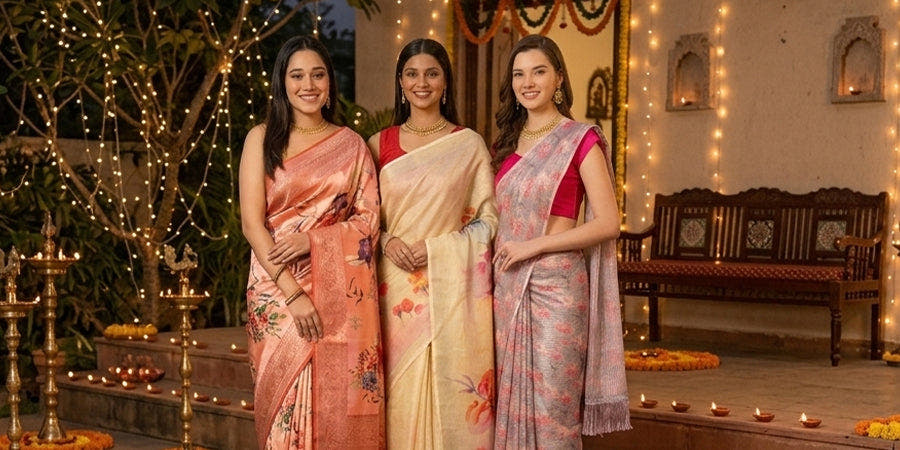
Shop Patola Sarees
 Sky Blue Pochampally Patola Soft Silk Saree
₹ 1,050
 Pink Pochampally Patola Soft Silk Saree
₹ 1,050
 Mustard Yellow Soft Silk Patola Saree with Pink Pallu
₹ 1,050
 Mustard Yellow Soft Banarasi Patola Saree with Zari Pallu
₹ 1,150
 Red Soft Semi Silk Ikkat Patola Weaving Saree
₹ 1,895
 Majestic Pochampally Patola Silk Saree
₹ 1,050
 Yellow Pochampally Patola Soft Silk Saree
₹ 1,050
 Pink Soft Zari Tissue Paithani Saree
₹ 1,550

For most wedding looks, a Banarasi saree suits those who want a lighter drape with rich zari work, while a Kanjivaram-style saree suits those who want a heavier silk feel with bold contrast borders. Neither is better in every case. The right pick depends on the ceremony, the weight you can carry through the day, and the look you want.
This guide compares the two in plain terms, explains which suits which wedding function, and shows a few wedding-ready picks from the Vastranand collection. Where a product is a Patola or Paithani style rather than a Kanjivaram, we say so, so you know exactly what you are buying.
What is the main difference between Banarasi and Kanjivaram sarees?
Both are silk sarees with zari, and both are common at weddings, so the differences are easy to mix up. The names point to different traditions. Banarasi is named after Varanasi and is known for its brocade-style patterns and zari work. Kanjivaram is named after Kanchipuram in Tamil Nadu and is widely known for its heavier silk and contrast borders.
When you compare them in a shop, look at the feel and the border first. A Banarasi piece often feels softer and lighter on the body. A Kanjivaram-style piece usually feels more substantial, with a strong border that is woven separately and joined to the body.
- Banarasi: lighter drape, zari-rich patterns, often chosen for a softer, more flowing look
- Kanjivaram-style: heavier silk feel, bold contrast border and pallu, often chosen for a traditional bridal look
- Check the label or product description for the exact fabric and weave before you buy
Which saree is better for a daytime or simple wedding function?
For a daytime function, a lighter saree is usually more comfortable for hours of sitting, greeting and moving around. This is where a Banarasi saree tends to win, because the drape is softer and the weight is easier to carry in warm weather.
A heavy Kanjivaram-style saree still works for a daytime ceremony if the wedding is formal and you enjoy a strong traditional look. Think about the venue and the season before you decide.
- Choose Banarasi for daytime haldi, mehndi or a long family function
- Choose a heavier Kanjivaram-style silk for a formal daytime muhurtham if you want a traditional bridal feel
- Test how the pleats sit for an hour, not just for a minute in front of the mirror


Which is better for the bride on the main wedding day?
Many brides choose the saree for the main ceremony based on how it looks in photos and how it makes them feel. A heavy silk with a strong border often photographs richly, and the traditional look is what many families expect at the main function.
A zari-rich Banarasi saree can be just as striking, especially in a softer colour or a richer pallu. The best test is a full trial with the blouse, petticoat and jewellery you plan to wear, because the saree can look very different once everything is on.
- Book a trial drape with your blouse, petticoat and jewellery
- Check the pallu length and how it sits on your shoulder
- Pick a colour that suits your skin tone and the season of the wedding
What should a wedding guest choose between the two?
For a guest, the choice is usually less about tradition and more about comfort and colour. A Banarasi or a soft silk Patola-style saree is often easier to wear for a long evening, and it still looks festive. Guests also need to think about the dress code of the family, so check with the hosts if you are unsure.
Our current wedding picks lean toward Patola and Banarasi-style silks, which many guests find a good middle ground between richness and ease.
- Guests: pick a lighter weave for long evenings
- Match the colour to the event, avoiding white and bridal reds unless the family asks for them
- Keep the blouse simple if the saree has a heavy border
How do I choose a wedding saree without overspending?
Price should follow the role of the saree, not just the name of the weave. A bride may want a special piece for the main day, while a guest may prefer a simpler silk for several functions. Set a budget per function, then compare the fabric and finish within that range.
At Vastranand, the wedding collection includes Banarasi and Patola-style silks at different price points. The examples below show how the range works in practice.
- Banarasi soft silk with zari pallu: Rs 1,150
- Pink soft zari tissue Paithani-style saree: Rs 1,550
- Royal blue soft silk double ikkat Patola-style saree with zari border: Rs 1,999
- Orange Patola silk zari weaving saree: Rs 2,250
See every design in our Patola Sarees for Wedding.
Read next
- Patola sarees for wedding at Vastranand
- Paithani sarees collection
- Best saree collections for wedding season 2026
Frequently asked questions
Is a Banarasi saree better than a Kanjivaram saree for a wedding?
Neither is better for every wedding. A Banarasi saree usually feels lighter and suits long functions, while a Kanjivaram-style saree feels heavier and suits a traditional bridal look. Choose based on the ceremony, the weather and how you want to look in photos.
Which saree is more comfortable to wear for a full day of functions?
A lighter silk is generally more comfortable for many hours of sitting and moving. Banarasi-style sarees are often chosen for this reason. Always do a trial drape to check how the saree feels with your blouse and petticoat.
Can a wedding guest wear a Patola-style saree?
Yes. Soft silk Patola-style sarees are often chosen by guests because they look festive and are easier to wear for long evenings. Check the dress code with the family if you are unsure about colours.
How do I get help choosing a wedding saree from Vastranand?
You can call or message our team on +91-8154000063 or email contact@vastranand.in. Our office hours are Monday to Saturday, 09:00 to 21:00. You can also return a saree within 22 days of delivery if it does not suit you.
Shop sarees from this story
Sky Blue Pochampally Patola Soft Silk Saree
₹ 1,050
Pink Pochampally Patola Soft Silk Saree
₹ 1,050
Mustard Yellow Soft Silk Patola Saree with Pink Pallu
₹ 1,050
Mustard Yellow Soft Banarasi Patola Saree with Zari Pallu
₹ 1,150
Red Soft Semi Silk Ikkat Patola Weaving Saree
₹ 1,895
Majestic Pochampally Patola Silk Saree
₹ 1,050
Yellow Pochampally Patola Soft Silk Saree
₹ 1,050
Pink Soft Zari Tissue Paithani Saree
₹ 1,550 Orange Patola Silk Zari Weaving Saree
₹ 2,250
 White Soft Silk Pochampally Patola Saree with Pink Pallu
₹ 1,050
Watch these sarees in motion
Loved this story? The sarees behind it are waiting for you — handcrafted, factory-direct, delivered across India.
Shop best sellers ← Back to The Vastranand Journal