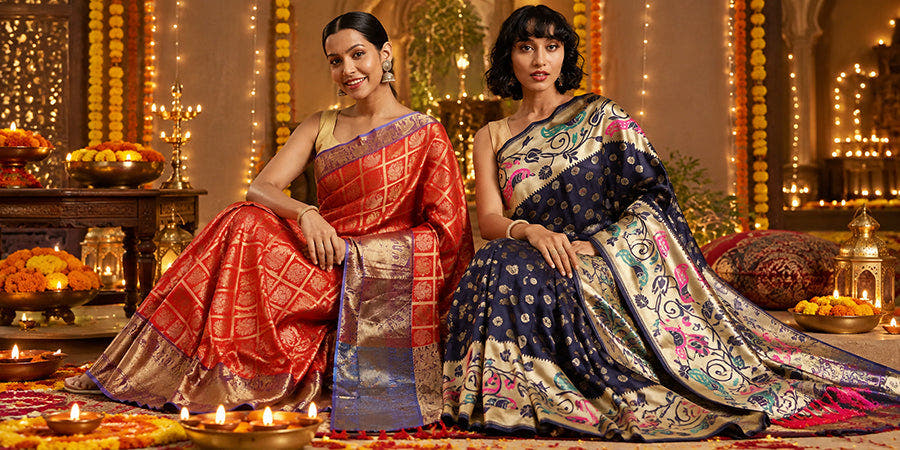
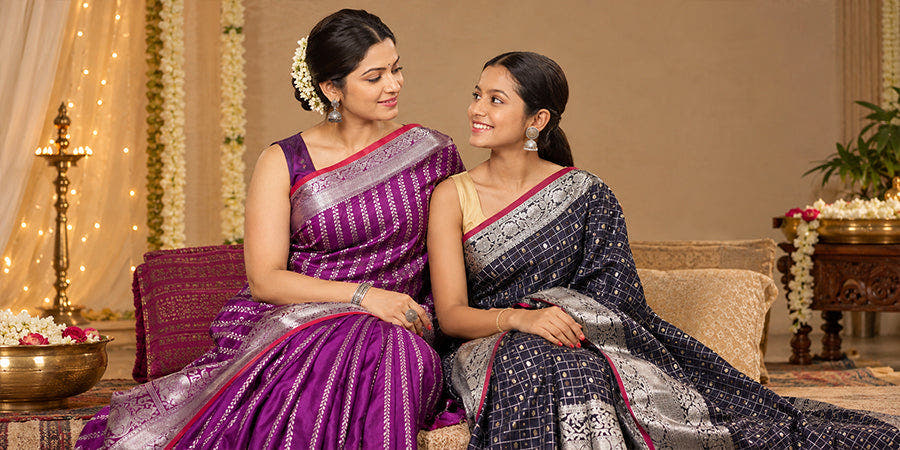
The short answer: Red is the heart of Karwa Chauth — it is the colour of suhaag — but you are not limited to one flat shade. Deep maroon, rani pink, tomato red, wine and rust all carry the tradition beautifully, and gold zari work turns any of them festive. Choose silk for the evening rituals and comfort for the day-long fast.
Why red owns Karwa Chauth
Karwa Chauth is the festival of married love — a day-long fast broken only after sighting the moon — and red has always been its colour: the shade of the bridal saree, of sindoor, of suhaag itself. Many women re-wear their wedding saree on this day, which is a tradition worth keeping if yours still fits the occasion. But “wear red” has more room in it than most people think.
The many reds: finding yours
Classic bridal red suits almost everyone, but consider the whole family of reds. Deep maroon photographs richer in evening light — and the moonlight rituals happen after dark. Rani pink reads festive and youthful. Tomato and coral reds glow on warmer skin tones; wine and burgundy flatter deeper ones. Rust and brick reds feel modern while staying rooted. If you love a border contrast, a red Banarasi with gold zari or a red Kora silk with digital butta work gives you tradition and freshness in one drape.
Fabric: you are fasting all day — plan for it
Remember the practical side: many women fast from sunrise to moonrise, often while managing the house, the puja preparations and the evening gathering. A heavy brocade worn from morning will exhaust you. The smart approach: comfortable wear through the day, then change into your ceremonial silk saree for the evening puja and moon ritual. Soft silks and lightweight silk blends give you the festive richness without the weight; katan and tissue silks shimmer beautifully under the moon and the diyas.
Beyond red: what else is welcome
If red truly is not your colour, tradition leaves room. Maroon, rani pink and orange-red are fully within custom. Gold and mustard carry auspiciousness. Many newlyweds wear their wedding lehenga or reception saree regardless of shade — re-wearing wedding attire is itself considered auspicious. The shades usually avoided on Karwa Chauth are white and black, which are traditionally kept away from suhaag festivals.
The details that complete the look
This is the festival where full solah shringar belongs: sindoor, bindi, mangalsutra, bangles — red and gold choodiyan especially — mehndi on the hands, and jhumkas or a maang tikka. Keep the pallu drape classic for the puja (it may go over the head during the rituals, so pin it where it can be lifted gracefully). A small clutch for the karwa thali items saves fumbling at moonrise.
Order in time, try at home
Karwa Chauth falls in the heart of the festive season, and courier loads rise every week closer to Diwali. Because Vastranand ships factory-direct from Surat — weaving and dispatching since 2017 — orders usually leave within 2–3 working days and reach you across India in 4–5 working days after dispatch (festive periods can take 3–4 days longer), with Cash on Delivery available. Order a couple of weeks early, drape it once at home, and if the shade is not what your screen promised, the 48-hour easy exchange lets you swap it well before the fast day. Browse the festive collection for the season's reds, or the tissue sarees if you want that under-the-moon shimmer.
Vastranand — factory-direct sarees from Surat, where tradition meets trend.
Shop sarees from this story
 Pink Bandhej Printed Dola Silk Saree
₹ 750
Pink Bandhej Printed Dola Silk Saree
₹ 750
 Multi Satin Georgette Saree
₹ 1,050
Multi Satin Georgette Saree
₹ 1,050 Cream Colour Double Border Chex Weaving Banarasi Soft Silk Saree
₹ 999
Cream Colour Double Border Chex Weaving Banarasi Soft Silk Saree
₹ 999 White Soft Silk Pashmina Kashmiri Print Saree
₹ 999
White Soft Silk Pashmina Kashmiri Print Saree
₹ 999 Sky Blue Satin Georgette Saree
₹ 1,050
Sky Blue Satin Georgette Saree
₹ 1,050 Vibrant Soft Chinnon Chiffon Floral Saree
₹ 750
Vibrant Soft Chinnon Chiffon Floral Saree
₹ 750 Soft Silk Pashmina Kashmiri Print Saree
₹ 999
Soft Silk Pashmina Kashmiri Print Saree
₹ 999 Sky Blue Pochampally Patola Soft Silk Saree
₹ 1,050
Sky Blue Pochampally Patola Soft Silk Saree
₹ 1,050 Classic Floral Print Chiffon Saree
₹ 1,050
Classic Floral Print Chiffon Saree
₹ 1,050
 Cream Soft Silk Kanjivaram Saree
₹ 1,450
Cream Soft Silk Kanjivaram Saree
₹ 1,450Watch these sarees in motion
Loved this story? The sarees behind it are waiting for you — handcrafted, factory-direct, delivered across India.
Shop best sellers ← Back to The Vastranand Journal