Few weaves carry as much mystery and magic as the Patola saree. Born in Patan, Gujarat, this double ikat silk has been prized by royal families and brides for centuries, and it remains one of the most labour-intensive textiles in the world. Since Vastranand itself began its journey in Surat, right here in Gujarat, this weave holds a special place in our story too.
In this guide, we walk you through what makes a Patola saree special, how it is woven, how to style and care for one, and where to find beautiful Patola pieces in our collection.
1. What Is a Patola Saree?
A Patola saree is a handwoven silk saree made using the double ikat technique, traditionally from Patan in Gujarat. Both the warp and weft threads are resist-dyed before weaving, so the pattern is built into the fabric itself rather than printed or embroidered on top.
This makes an authentic Patola reversible, with the same design visible on both sides of the saree, a detail that instantly signals fine craftsmanship to anyone who knows the weave. Historically, Patola was worn by royalty and gifted at weddings as a symbol of prosperity, and that heirloom status still holds true today. You can browse our full Patola sarees collection to see this craftsmanship up close, including this Patola soft silk saree in yellow.

2. The Double Ikat Weaving Process
Genuine Patola weaving is famously slow. Master weavers plan the pattern mathematically on graph paper long before a single thread is dyed, then tie and dye the warp and weft yarns separately in multiple colours, calculating exactly where each colour needs to sit once the fabric is woven.
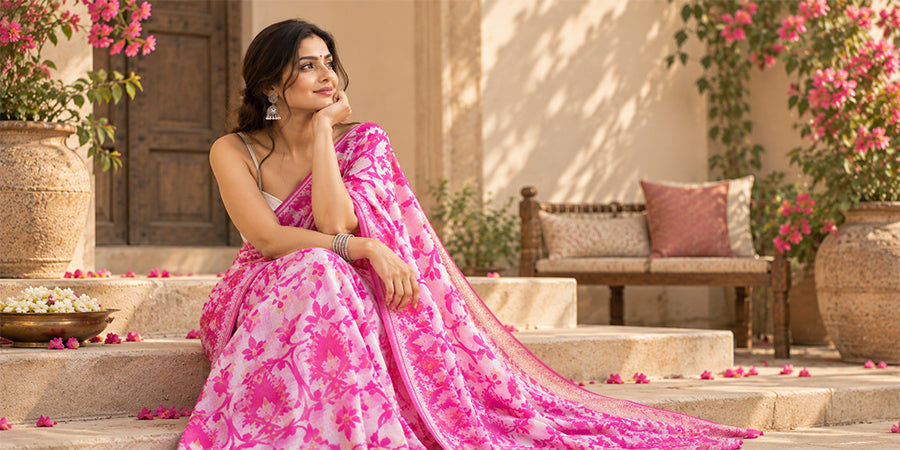
The threads are then woven together with extreme precision, nudged strand by strand, so the pre-dyed motifs align perfectly on the loom. A single Patola saree can take anywhere from four months to over a year to complete depending on the complexity of the design, which is why the craft is treasured and why more affordable Patola-inspired weaves have grown popular alongside it. This Patola soft silk saree in pink and this peach Patola silk saree both carry the classic zari border associated with this weave.

3. Real Patola vs Patola-Print Sarees
True double ikat Patola sarees are rare and priced accordingly, so many brands offer Patola-print or single ikat sarees that recreate the look at a friendlier price. These use printing or simpler weaving techniques to capture the geometric charm of Patola motifs on fabrics like georgette, silk, or Chanderi silk.
Both versions are worth owning for different occasions. A printed piece is a wonderful way to enjoy the Patola aesthetic for everyday festive wear without the wait or the price tag of an authentic handwoven saree, while a genuine woven Patola makes a meaningful investment piece for milestone celebrations. For an everyday festive option, this Patola print georgette saree is light and easy to drape, while pieces from our Patola collection lean closer to traditional silk weaves.

4. Signature Patola Motifs and Colours
Patola sarees are known for bold geometric patterns, parrots, elephants, flowers, and dancing figures set within diamond or checked grids. Some traditional designs are even named after their motifs, such as the "Nari Kunjar" pattern featuring women and elephants, or the "Pan Bhat" pattern inspired by betel leaves.
The colour palette leans into rich jewel tones like maroon, green, mustard, and royal blue, chosen because they hold their vibrancy beautifully through the natural dyeing process. You can see these signature tones in this navy Patola silk saree and this green Patola silk saree, both finished with a traditional zari border.

5. How to Style a Patola Saree
Because the pattern is so detailed, a Patola saree looks best with minimal, elegant styling. Choose a contrast or solid-colour blouse so the weave stays the hero of the look, and keep accessories from competing with the intricate motifs.
Pair it with statement gold or Kundan jewellery, a neat bun, and a bindi for a traditional finish. If you want a lighter look for a day event, swap the heavy jewellery for delicate gold studs and let the saree do the talking. This Chanderi silk saree with Patola design in black is a versatile pick that works for both festive and semi-formal events.

6. Best Occasions to Wear a Patola Saree
Patola sarees are a natural choice for weddings, engagements, and major festivals where you want a rich, heirloom-worthy look. The intricate weave photographs beautifully for mehendi, haldi, and reception functions too, and it is a favourite pick as Navratri and the festive season approach.
It also makes a thoughtful gift for a daughter, sister, or daughter-in-law, since Patola sarees are traditionally passed down as heirlooms in Gujarati families. Explore our dedicated Patola sarees for weddings collection for bridal-ready options, including this green Patola design Chanderi silk saree and this navy Patola design Chanderi silk saree.

7. Patola vs Banarasi and Kanjivaram Silk
Patola, Banarasi, and Kanjivaram are all beloved silk weaves, but each has its own identity. Banarasi silk is known for brocade and zari work woven on a jacquard loom, while Kanjivaram is prized for its heavy silk body, temple borders, and lustrous finish from South India.
Patola stands apart for its resist-dye precision and reversible pattern, a technique that no other Indian weave quite replicates. Interestingly, some weavers now combine traditions, pairing a Banarasi silk base with Patola-inspired zari motifs for a fusion look. If you enjoy layering weaves in your wardrobe, this Banarasi Patola zari party wear saree in green and this Banarasi Patola zari saree in orange blend both traditions beautifully.

8. How to Care for Your Patola Saree
Patola silk deserves gentle handling. Dry clean it to preserve the natural dye and zari work, and avoid spraying perfume or water directly on the fabric since it can affect the colours over time.
Always store it wrapped in muslin cloth away from direct sunlight and humidity, ideally inside a cotton bag rather than plastic, which can trap moisture. Fold along different lines each season to avoid permanent crease marks on the silk, and let it breathe in the open air a few times a year. This simple routine keeps a Patola saree looking radiant for generations, which is exactly why it makes such a meaningful heirloom.
9. Vastranand's Patola Saree Edit
From bold silk weaves to lighter Patola-print options, Vastranand's Patola edit has something for every celebration and every budget. This Patola printed Moonga Kota Doriya saree and this Ikkat digital print saree with a Patola pallu are two more ways to bring this Gujarati weave into your wardrobe, whether you want a bold party look or a subtle festive drape.
For more handwoven treasures like this, browse our Craft Stories collection, which celebrates artisan weaves from across India, and our Kota sarees collection for lightweight options that carry a similar handcrafted charm.

Why Shop Sarees at Vastranand
Vastranand brings you handwoven weaves like Patola directly from the source through our factory-to-customer (F2C) model, cutting out middlemen so you get honest, factory-direct prices without compromising on quality. We are trusted by over 1 million happy customers across India, with Cash on Delivery available nationwide and easy returns on every order, so you can shop Patola sarees online with complete confidence.
Frequently Asked Questions
Q1. What makes a Patola saree so expensive?
A genuine double ikat Patola saree can take months of precise hand-dyeing and weaving, which is why authentic pieces are priced higher than printed or single ikat versions.
Q2. How do I know if a Patola saree is authentic?
Authentic Patola is reversible, with the same pattern visible on both sides of the fabric, and the motifs are woven rather than printed.
Q3. Can I wear a Patola saree for a wedding?
Yes, Patola sarees are a popular choice for weddings and receptions thanks to their rich colours and intricate motifs. Browse our Patola sarees for wedding collection for bridal-ready picks.
Q4. How should I store a Patola saree?
Wrap it in muslin cloth, keep it away from direct sunlight and moisture, and refold it periodically along different lines to prevent creases.
Q5. What is the difference between Patola and Patola print sarees?
Patola sarees use the traditional double ikat weaving technique, while Patola print sarees recreate the same motifs using printing methods on fabrics like georgette, making them a lighter and more affordable option.
Ready to add this timeless Gujarati weave to your wardrobe? Shop the full Patola sarees collection at Vastranand today.
Shop sarees from this story
 Maroon Paithani Silk Blend Saree
₹ 2,145
Maroon Paithani Silk Blend Saree
₹ 2,145 Purple Banarasi Silk Kanchi Zari Weaving Saree
₹ 1,495
Purple Banarasi Silk Kanchi Zari Weaving Saree
₹ 1,495 Linen Kalamkari Printed Chanderi Saree
₹ 850
Linen Kalamkari Printed Chanderi Saree
₹ 850 Orange Colour Design Linen Saree with Bandhej and kalamkari Digital Print
₹ 999
Orange Colour Design Linen Saree with Bandhej and kalamkari Digital Print
₹ 999 Banarasi Katan Tissue Silk Butti Design Festive Wear Saree
₹ 1,345
Banarasi Katan Tissue Silk Butti Design Festive Wear Saree
₹ 1,345 Patola Digital printed Moonga Silk Kota Doriya Designer Party Wear Saree
₹ 1,250
Patola Digital printed Moonga Silk Kota Doriya Designer Party Wear Saree
₹ 1,250 Navy Colour Banarasi Katan Silk Kanchi Zari Weaving Saree
₹ 1,445
Navy Colour Banarasi Katan Silk Kanchi Zari Weaving Saree
₹ 1,445 Exquisite Red Colour Kalamkari Pattu Banarasi Silk Saree
₹ 1,495
Exquisite Red Colour Kalamkari Pattu Banarasi Silk Saree
₹ 1,495 Soft Georgette Bollywood celebrity Wear Saree
₹ 750
Soft Georgette Bollywood celebrity Wear Saree
₹ 750 Attractive Soft Silk Gadwal Border Pochampally Print Saree
₹ 1,395
Attractive Soft Silk Gadwal Border Pochampally Print Saree
₹ 1,395Watch these sarees in motion
Loved this story? The sarees behind it are waiting for you — handcrafted, factory-direct, delivered across India.
Shop best sellers ← Back to The Vastranand Journal