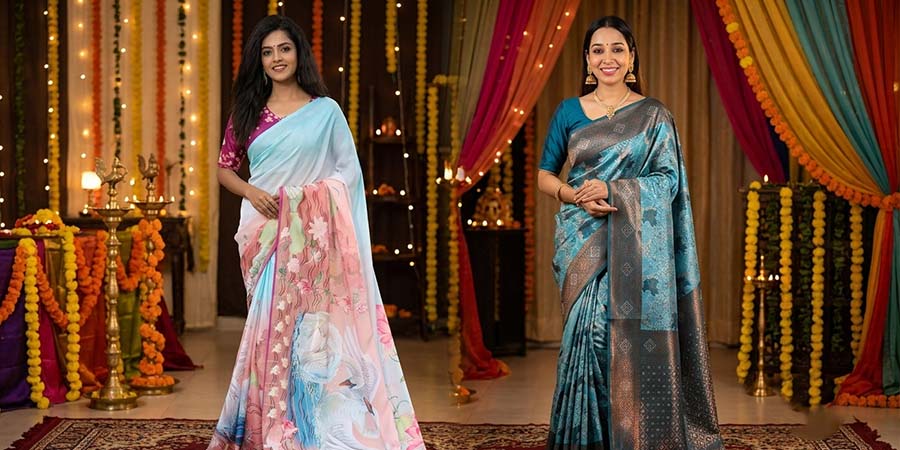
Shop Banarasi Sarees
 Soft Silk Woven Design Zari Kanchi Blend Banarasi Saree
₹ 1,250
 Banarasi Soft Silk Print Party Wear Saree
₹ 1,845
 Exclusive Soft Gold Zari Tissue Digital Print Saree
₹ 1,250
 Exquisite Blue Pattu Banarasi Silk Saree
₹ 1,495
 Eye-Catching Gadwal Soft Silk Festive Wear Saree
₹ 1,695
 Banarasi Katan Silk Kalamkari Digital Print Saree
₹ 2,425
 Light Green Soft Silk Kalamkari Digital Print Saree
₹ 1,475
 Kanjivaram Yellow Colour Soft Silk Kanchi Zari Weaving Saree
₹ 1,895

Every saree in your wardrobe tells a story — the Banarasi from your sister's wedding, the Kanjivaram passed down from your mother, the breezy cotton you wear every weekend. But even the most beautiful saree can lose its shine if it isn't stored the right way.
With Diwali and wedding season just behind us (or around the corner), this is the perfect time to sort, air out and re-fold your sarees before winter sets in. Here is your fabric-by-fabric guide to keeping every saree in your collection fresh, crease-free and ready to wear for years.
1. Banarasi & Zari-Heavy Silk Sarees
Banarasi sarees are woven with real gold and silver zari, which can tarnish quickly if trapped in plastic or exposed to humidity. Always wrap them in a soft muslin or cotton cloth instead of a plastic cover, and air them out in the shade every two to three months.
Fold along the original pleats to avoid new stress lines on the zari border, and store them flat rather than hanging. You can find pieces like this Banarasi Katan Silk Butti Design Festive Wear Saree and this Exquisite Blue Pattu Banarasi Silk Saree in our Banarasi Sarees collection.

2. Kanjivaram & Pure Silk Sarees
Pure silk needs room to breathe, so avoid sealing a Kanjivaram in an airtight plastic bag for long periods. Instead, roll or fold it loosely in cotton cloth, and tuck in a few dried neem leaves or a silica gel sachet rather than naphthalene balls, which can leave a stubborn smell on silk.
Refold your silk sarees along slightly different lines every few months so the same crease doesn't weaken the fabric over time. Explore options like this Kanjivaram Bottle Green Colour Silk Blend Woven Design Saree and this Baby Pink Soft Silk Kanjivaram Saree from our Kanjivaram Sarees collection.

3. Georgette & Satin Party Wear Sarees
Georgette and satin sarees are soft and slippery, which means embroidered borders can snag against zari work from a neighbouring saree in your cupboard. Store each one in its own breathable cotton cover and avoid stacking too many sarees on top of each other.
Because these fabrics crease easily, give them a light steam iron before every wear instead of a hot press, which can flatten the sheen. Try this Sky Blue Satin Georgette Saree or this Pink Satin Georgette Saree from our Georgette Sarees collection.

4. Chiffon Sarees
Chiffon is wonderfully lightweight, but that same delicacy means it snags easily on jewellery, rough shelf edges or even rough fingernails. Keep your chiffon sarees wrapped in soft paper or cloth, and store them away from direct sunlight so the colours don't fade.
A gentle hand wash or dry clean, followed by drying in the shade, keeps the drape soft for longer. You'll love this Stylish Poly Chiffon Floral Digital Print Saree and this Stylish Cream Colour Poly Chiffon Geometric Print Saree, both from our Chiffon Sarees collection.

5. Cotton & Handloom Sarees
Cotton sarees need to breathe, so never seal them tightly in plastic — trapped moisture can cause yellowing or mildew spots, especially during humid months. Wash, dry completely in the shade, and store them in a cotton pillowcase or muslin bag instead.
A light starch before folding helps cotton hold its shape and crisp look for your next wear. This Bollywood Cream Colour Woven Design Cotton Saree is a lovely everyday pick from our Cotton Sarees collection.

6. Organza & Net Sarees
The sheer, delicate weave of organza and net sarees can tear under the weight of heavier silk sarees stacked above them. Always place these on top of your pile, or hang them on a padded hanger with the pallu draped gently to avoid sharp folds across embroidered borders.
Keep them away from rough surfaces that can pull at the threads. Browse pieces like this Soft Organza Leheriya Digital Print Party Wear Saree and this Organza Floral Print Zari Work Saree in our Organza Sarees collection.

7. Linen Sarees
Linen is a natural fibre that absorbs moisture quickly, so it should always be stored completely dry in a well-ventilated cupboard. Adding a silica gel packet nearby helps control humidity, especially just after the monsoon.
Refold linen sarees every season along slightly different lines, since repeated creasing in the same spot can weaken the fibres. Discover this Linen Kalamkari Printed Chanderi Saree and this Elegant Red Colour Solid Linen Blend Saree from our Linen Sarees collection.

8. Chanderi & Tissue Sarees
Chanderi and tissue sarees are woven with fine gold zari on a sheer, lightweight base, so a layer of soft tissue paper or muslin between the folds prevents the zari from scratching the delicate fabric. Store them flat rather than rolled, so the zari border doesn't crack.
Keep them in a cool, dry spot away from direct heat, which can dull the gold tone over time. Take a look at this Stylish Navy Blue Colour Linen Kalamkari Print Saree and this Beautiful Mustard Colour Digital Print Soft Linen Saree from our Chanderi Sarees collection.

9. Pashmina & Winter Silk Sarees
As the weather turns cooler, it's time to bring out your Pashmina and winter silk sarees and pack away your lighter summer pieces. Before storing winter sarees away again next year, wrap them in a breathable cotton cloth and place them in a container with a few cloves or neem leaves to naturally keep moths away.
Air them out in gentle sunlight for an hour before the first wear of the season to freshen the fabric. Explore this White Soft Silk Pashmina Kashmiri Print Saree and this Pink Banarasi Silk Gadwal Pattu Saree from our Silk Sarees collection.

Why Shop Sarees at Vastranand
Vastranand brings you factory-direct (F2C) prices by cutting out the middlemen, so you get genuine craftsmanship without the usual markup. We're proud to have served over 1 million happy customers across India, with Cash on Delivery available nationwide and easy, hassle-free returns so you can shop with complete confidence.
Frequently Asked Questions
1. Can I use mothballs to protect silk sarees?
It's best to avoid naphthalene mothballs on silk, as the smell can linger and the chemicals may discolour the fabric over time. Neem leaves, cloves or silica gel sachets are gentler, natural alternatives.
2. Should sarees be hung or folded?
Heavier silk, Banarasi and zari-work sarees are best folded and stored flat to avoid stretching, while lighter georgette, chiffon and satin sarees can be hung on padded hangers to reduce creasing.
3. How often should I re-fold my sarees?
Refold your sarees every two to three months along slightly different lines. This simple habit prevents permanent crease marks and keeps the fabric and zari work in good condition.
4. Is it safe to store sarees in plastic covers?
Plastic traps moisture and can cause yellowing, mildew or tarnished zari, especially in humid weather. Cotton or muslin covers let the fabric breathe while still keeping dust away.
5. How do I remove stubborn fold-line creases before wearing a saree?
A light steam iron on a low setting, worked gently along the pleats, smooths out most creases without damaging delicate embroidery or zari borders.
Ready to add a few new favourites to your collection before you reorganise your wardrobe? Browse our Silk Sarees collection for pieces that are as easy to care for as they are beautiful to wear.
Shop sarees from this story
Soft Silk Woven Design Zari Kanchi Blend Banarasi Saree
₹ 1,250
Banarasi Soft Silk Print Party Wear Saree
₹ 1,845
Exclusive Soft Gold Zari Tissue Digital Print Saree
₹ 1,250
Exquisite Blue Pattu Banarasi Silk Saree
₹ 1,495
Eye-Catching Gadwal Soft Silk Festive Wear Saree
₹ 1,695
Banarasi Katan Silk Kalamkari Digital Print Saree
₹ 2,425
Light Green Soft Silk Kalamkari Digital Print Saree
₹ 1,475
Kanjivaram Yellow Colour Soft Silk Kanchi Zari Weaving Saree
₹ 1,895 Stylish Navy Blue Colour Silk Banarasi Saree With Woven Design
₹ 1,295
 Grey Colour Banarasi Katan Silk Kanchi Zari Weaving Saree
₹ 1,050
Watch these sarees in motion
Loved this story? The sarees behind it are waiting for you — handcrafted, factory-direct, delivered across India.
Shop best sellers ← Back to The Vastranand Journal