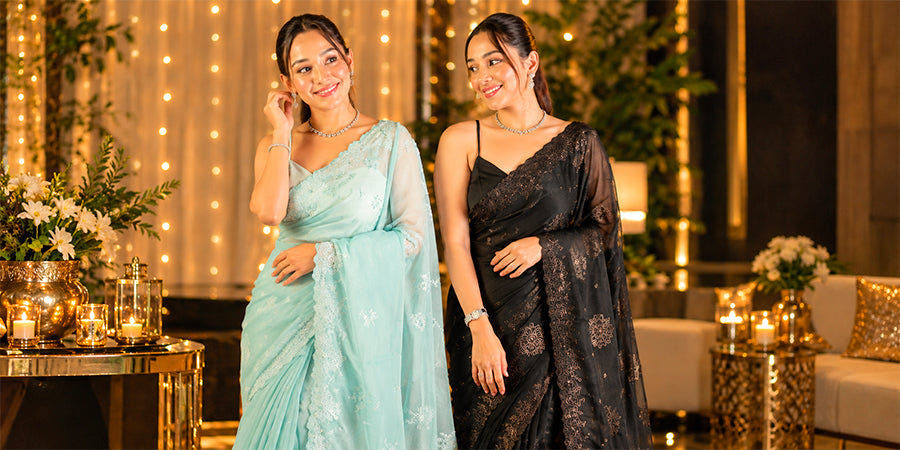
The short answer: Choose tissue when you want a metallic, structured shimmer that photographs like liquid gold; choose satin when you want a soft, fluid gloss that drapes close to the body. Tissue suits weddings and receptions, satin suits evening parties. Both need simple blouses and minimal jewellery — the fabric is the statement.
Two different kinds of shine
“Shiny saree” covers two very different fabrics. Tissue is woven with fine zari-like yarn, so the shine is metallic and comes from the weave itself — it catches light in flashes, holds structure, and looks regal in photos. Satin is about the finish: the weave creates a smooth, glossy surface with a heavier, fluid fall that skims the body. Put simply: tissue glitters, satin glows.
When tissue is the right pick
Tissue sarees are wedding-season fabric. The metallic sheen reads festive from across a hall, the crisp body holds pleats through a long event, and gold, champagne and pastel tissues pair beautifully with temple and kundan jewellery. A dual-tone tissue silk shifts colour as you move — the kind of saree people ask about at receptions. Browse the full tissue saree collection for zari-butti, Kanjivaram-style and floral-print options.
When satin wins
Satin's gloss is softer and more modern — ideal for evening parties, cocktail events and sangeet nights where you want movement rather than structure. Satin-finish georgettes give you the gloss with an easier drape, and dark jewel tones (emerald, wine, midnight blue) look especially rich because the smooth surface deepens colour. If your event is more dance floor than mandap, satin is the pick — see the party wear collection for satin and shimmer styles.
Styling rules for shiny fabrics
- One hero only. A shiny saree with a heavily embellished blouse fights itself. Pair tissue or satin with a plain silk or velvet-touch blouse in a matching or contrast tone.
- Minimal jewellery. One statement piece — a choker or jhumkas, not both. The fabric already does the sparkle.
- Watch the lighting. Tissue shines brightest in warm indoor light; satin looks best in evening settings. For harsh daytime sun, a Chanderi gives a gentler glow.
- Pleat with patience. Both fabrics are slippery — pin every pleat, and press satin on the reverse side only.
Caring for the shine
Dry-clean tissue sarees — the metallic yarns can dull with water washing. Satin can be gently hand-washed in cold water if unembellished, but never wrung; roll in a towel and dry flat in shade. Store both on padded hangers or refold along different lines every few months so the shine doesn't crack at the creases, and keep them away from perfume sprays, which spot glossy surfaces.
Shine on a factory-direct budget
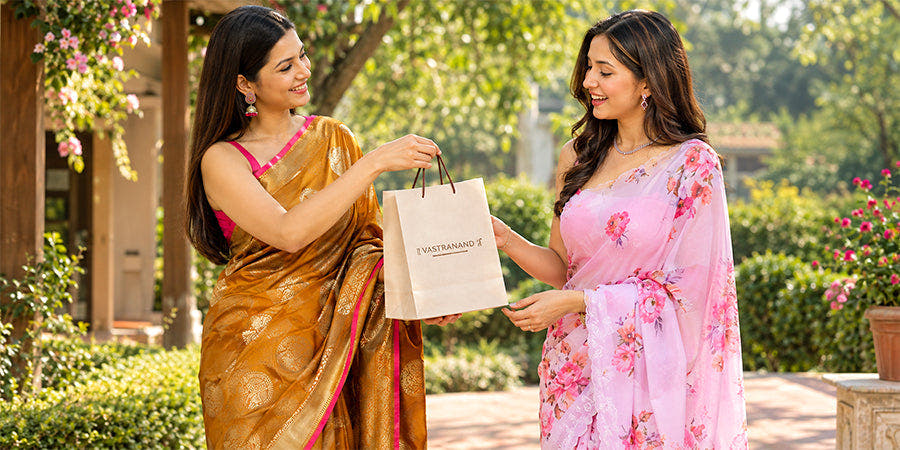
Because Vastranand sells factory-direct from Surat — where most of India's tissue and satin-finish sarees are actually woven — the shine costs a fraction of showroom prices, and new designs land in the new arrivals weekly. Orders are usually dispatched within 2–3 working days and generally arrive in 4–5 working days after dispatch across India (festive periods can take 3–4 days longer), with a 48-hour exchange window after delivery and support on +91 81540 00063. Every saree includes a 0.80 m blouse piece, so your plain-blouse pairing is already in the box.
Vastranand — factory-direct sarees from Surat since 2017. 4.9★ rated by 79,000+ customers.
Shop sarees from this story
 Pink Bandhej Printed Dola Silk Saree
₹ 750
Pink Bandhej Printed Dola Silk Saree
₹ 750
 Multi Satin Georgette Saree
₹ 1,050
Multi Satin Georgette Saree
₹ 1,050 Cream Colour Double Border Chex Weaving Banarasi Soft Silk Saree
₹ 999
Cream Colour Double Border Chex Weaving Banarasi Soft Silk Saree
₹ 999 White Soft Silk Pashmina Kashmiri Print Saree
₹ 999
White Soft Silk Pashmina Kashmiri Print Saree
₹ 999 Sky Blue Satin Georgette Saree
₹ 1,050
Sky Blue Satin Georgette Saree
₹ 1,050 Vibrant Soft Chinnon Chiffon Floral Saree
₹ 750
Vibrant Soft Chinnon Chiffon Floral Saree
₹ 750 Soft Silk Pashmina Kashmiri Print Saree
₹ 999
Soft Silk Pashmina Kashmiri Print Saree
₹ 999 Sky Blue Pochampally Patola Soft Silk Saree
₹ 1,050
Sky Blue Pochampally Patola Soft Silk Saree
₹ 1,050 Classic Floral Print Chiffon Saree
₹ 1,050
Classic Floral Print Chiffon Saree
₹ 1,050
 Cream Soft Silk Kanjivaram Saree
₹ 1,450
Cream Soft Silk Kanjivaram Saree
₹ 1,450Watch these sarees in motion
Loved this story? The sarees behind it are waiting for you — handcrafted, factory-direct, delivered across India.
Shop best sellers ← Back to The Vastranand Journal