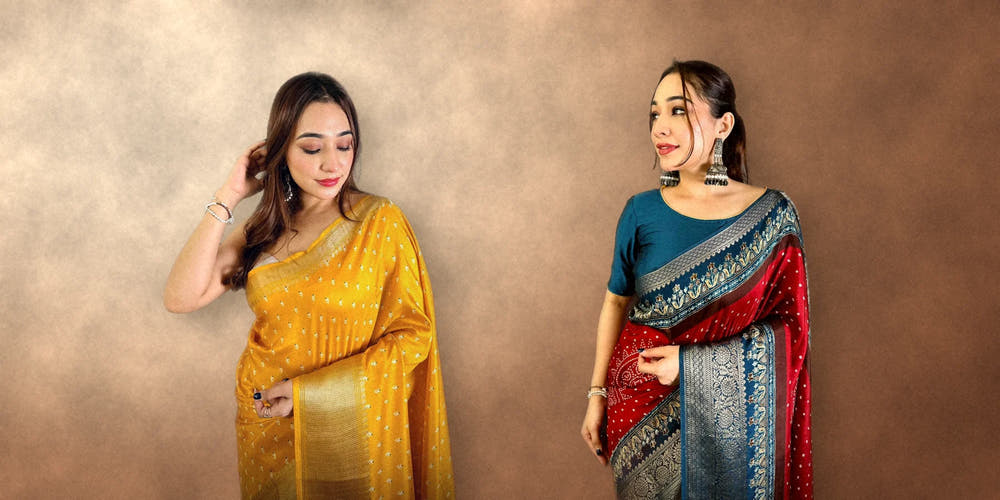
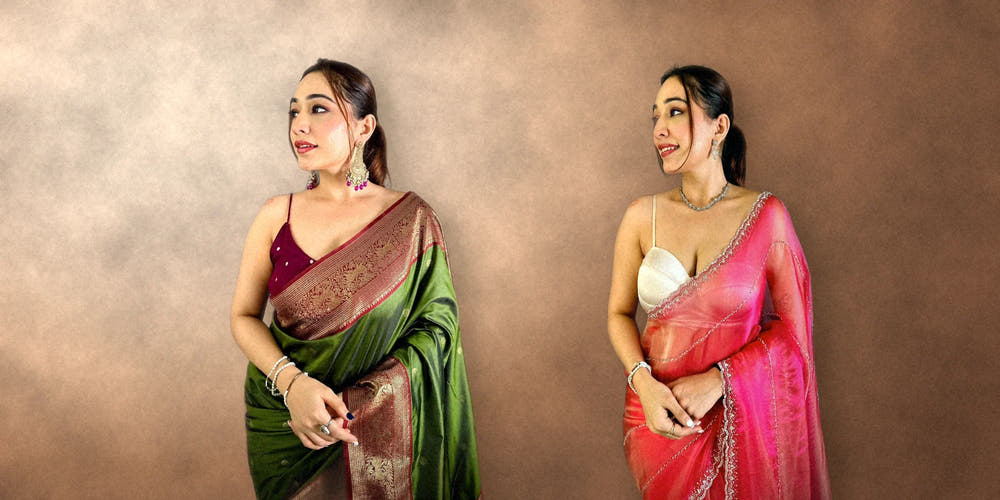
Shop Festive Sarees
 Off White Ethnic Motif Silk Blend Saree
₹ 1,995
 White Soft Silk Pashmina Kashmiri Print Saree
₹ 999
 Pink Bandhej Printed Dola Silk Saree
₹ 750
 Soft Silk Pashmina Kashmiri Print Saree
₹ 999
 Baby Pink Soft Silk Kanjivaram Saree
₹ 1,550
 Sky Blue Pochampally Patola Soft Silk Saree
₹ 1,050
 Cream White Soft Silk Gadwal Checked Saree with Zari Border
₹ 1,250
 Peach Ombre Chinnon Chiffon Floral Print Saree with Pink Pallu
₹ 750
An uppada saree is a light, soft silk saree known for its fine weave and delicate woven motifs, which is why it stays comfortable through long wedding days and festival evenings. To choose one, check the weight, the zari, the motifs and the colour against the occasion you have in mind.
This guide is written for first-time buyers. It explains why the weave feels so airy, how to tell a good piece from a weak one, which colours suit weddings and festivals, and how to style and care for the saree afterwards.
What Makes an Uppada Saree So Light and Easy to Wear?
The Uppada weaving tradition is associated with Andhra Pradesh and is loved for its fine, airy body. The cloth feels thin and smooth in the hand, and the pattern is woven into it instead of being printed on top. That is why the drape falls softly and never feels stiff the way a heavy temple silk can.
Motifs such as small buttas, creepers and borders are built in with extra threads, often in a style close to jamdani. When you touch the cloth, the design feels slightly raised and clean, not flat and stuck on.
Because the weight is low, this saree suits first-time saree wearers, long ceremonies and warm weather. If a heavy Kanjivaram tires you out by the afternoon, a light weave like this is worth trying. Please note that the sarees in our Uppada range are Uppada-style pieces inspired by this tradition, so read the fabric line on each product page before you order.
You will see the same kind of saree called an uppada silk saree or an uppada pattu saree. Pattu simply means silk in Telugu and Tamil, so the two names usually point to the same family of light silk weaves. If a listing says silk blend, treat it as a blend and judge it that way.
How Can You Tell a Good Weave and Zari from a Weak One?
Most first-time buyers worry about quality because the sarees look so delicate. You do not need expert tools. A few simple checks at home, or on the product page, tell you a lot.
Start with the fabric itself, then move to the zari and the finishing. A saree that looks lovely in a photograph should also hold up when you hold it in your hands.
- Hold the saree up to the light. The weave should look even, without thin patches, gaps or uneven lines running across the cloth.
- Run your hand over the motifs. Good woven motifs feel neat and slightly raised, and the threads at the edges of each motif are tidy.
- Turn the saree over. The back of a well-woven piece looks orderly, with no heavy tangles of loose thread hanging off the design.
- Look at the zari. It should have a steady, even shine and sit flat along the border. Zari that looks patchy, rough or too glaring in one place is a warning sign.
- Check the border and the pallu together. They should be joined cleanly, and the pallu design should be balanced, not crowded on one side.
- Read the fabric description. If it says silk blend, expect the feel and care of a blend. Ask us if the description is unclear.
Which Uppada Colours and Designs Suit a Wedding?
For a wedding, think about your role first. A bride or a close family member can choose richer colours and a fuller border, while a guest usually looks best in a softer shade with a restrained zari border. Light weaves are very forgiving on a long day, because you can sit, eat, walk and pose for photographs without feeling weighed down.
Deep reds, maroons, greens and royal blues with a visible zari border feel right for the main ceremony. For a morning function, pastel shades such as peach, mint or soft yellow look fresh in daylight. Gold zari shines well in the evening, so keep that for sangeet or reception hours.
If you are planning an engagement, our collection of sarees for engagement shows more colours and styles to compare. For a Telugu or South Indian wedding, it also helps to see how other silks are worn, and our guide to the types of pattu sarees explains the range clearly.
Which Uppada Colours Work for a Festival?
Festivals ask for a different mood. You may be cooking, welcoming guests, sitting for puja and then stepping out in the evening, so ease of movement matters as much as colour. A light weave gives you that without losing the festive look.
Match the colour to the day. Yellow and orange feel right for Ugadi and harvest festivals, red and green for Navratri and Diwali puja, and white or ivory with gold for quieter evenings. If you want more ideas on colour, our Diwali colour guide is a good companion read.
When you are unsure, pick a single strong colour with a contrasting border. It photographs well, it pairs easily with jewellery, and it does not need much else to look complete.
How Do You Style an Uppada Saree: Blouse, Jewellery and Shoes?
A light saree rewards simple styling. Let the weave and the border do the talking, and add only what supports them.
For the blouse, a contrast colour in a plain or lightly embroidered fabric lets the saree stand out. A boat neck or round neck with elbow sleeves is comfortable and stays in proportion with a delicate drape. If the saree has a rich pallu, keep the blouse simple. If the saree is plain, a zari or embroidered blouse brings the festive feel.
For jewellery, match the metal to the zari. Gold zari goes with temple jewellery, jhumkas and a layered necklace. Silver zari looks better with kundan or oxidised pieces. Our jewellery pairing ideas post covers more combinations, and our footwear guide helps you finish the look from the ground up.
- Pleat neatly and pin well. Light fabric slips more easily than heavy silk, so keep a few extra safety pins handy.
- Use a firm petticoat in a matching shade so the fall stays smooth and the colour does not look washed out.
- Choose comfortable footwear, since you may be standing for hours. Flat sandals or low block heels work well.
- Keep hair and makeup simple, with a gajra or a neat bun, and let the saree stay the centre of the look.
What Should You Check Before Buying, and How Do You Care for It?
Think of this as a short uppada saree buying guide. Decide the occasion, choose the colour, read the fabric line, study the zari and border in the photographs, and check the pallu design. Then compare a few pieces side by side, because a saree that looks different in two photographs is easier to judge once you see them together. You can browse our Uppada collection at your own pace and also look through our handloom sarees to see how other woven pieces compare.
Care keeps the weave neat. Dry clean the first time, and after that follow the care label. Store the saree folded in soft cotton or muslin, away from damp, and refold it along a different line now and then so the creases do not set in one place. Keep perfume and hairspray away from the zari.
On our side, here is what the brand facts confirm. Orders are packed in 2 to 3 days and then spend 4 to 5 days on the way. Returns are accepted within 22 days of delivery. If you have a question about a particular saree, you can write to contact@vastranand.in or call +91-8154000063, Monday to Saturday, 9 am to 9 pm.
Read next
Frequently asked questions
Is an Uppada saree good for a long wedding day?
Yes, because the weave is light and airy, it is comfortable to wear for hours. You can sit, walk and attend several functions without feeling weighed down. Choose a richer colour and zari border for the main ceremony, and keep the styling simple so the saree stays easy to manage.
Is Uppada silk the same as Uppada pattu?
The two names are usually used for the same family of light silk weaves. Pattu means silk in Telugu and Tamil. Always read the fabric line on the product page, since a silk blend is a blend and should be cared for and judged that way.
Can a first-time saree wearer manage this saree?
Yes. The fabric is light and drapes softly, so pleating is easier than with a heavy silk. Use a firm petticoat, pin the pleats and pallu well, and practise the drape once before the event so you feel confident on the day.
How do I store it so the zari stays bright?
Fold it in soft cotton or muslin and keep it in a dry, airy place away from damp and strong perfume. Change the fold lines once in a while so creases do not set, and dry clean the first time before following the care label.
What if the saree does not look right when it arrives?
The brand facts say returns are accepted within 22 days of delivery. Check the saree in daylight, compare it with the product page, and contact us at contact@vastranand.in if anything looks different from what you expected.
Shop sarees from this story
Off White Ethnic Motif Silk Blend Saree
₹ 1,995
White Soft Silk Pashmina Kashmiri Print Saree
₹ 999
Pink Bandhej Printed Dola Silk Saree
₹ 750
Soft Silk Pashmina Kashmiri Print Saree
₹ 999
Baby Pink Soft Silk Kanjivaram Saree
₹ 1,550
Sky Blue Pochampally Patola Soft Silk Saree
₹ 1,050
Cream White Soft Silk Gadwal Checked Saree with Zari Border
₹ 1,250
Peach Ombre Chinnon Chiffon Floral Print Saree with Pink Pallu
₹ 750 Mustard Poly Chiffon Diamond Stone Work Saree
₹ 1,050
 Regal Freehand Abstract Chinnon Saree
₹ 1,050
Watch these sarees in motion
Loved this story? The sarees behind it are waiting for you — handcrafted, factory-direct, delivered across India.
Shop best sellers ← Back to The Vastranand Journal