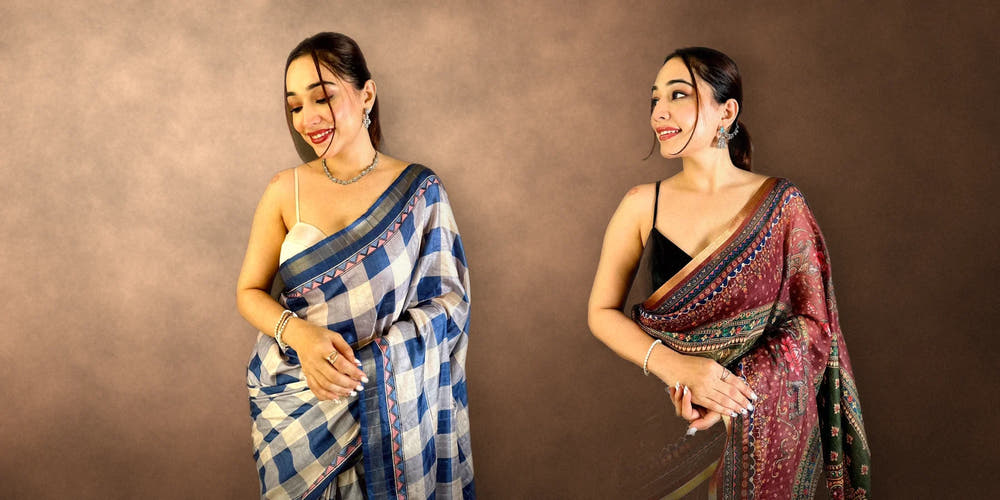
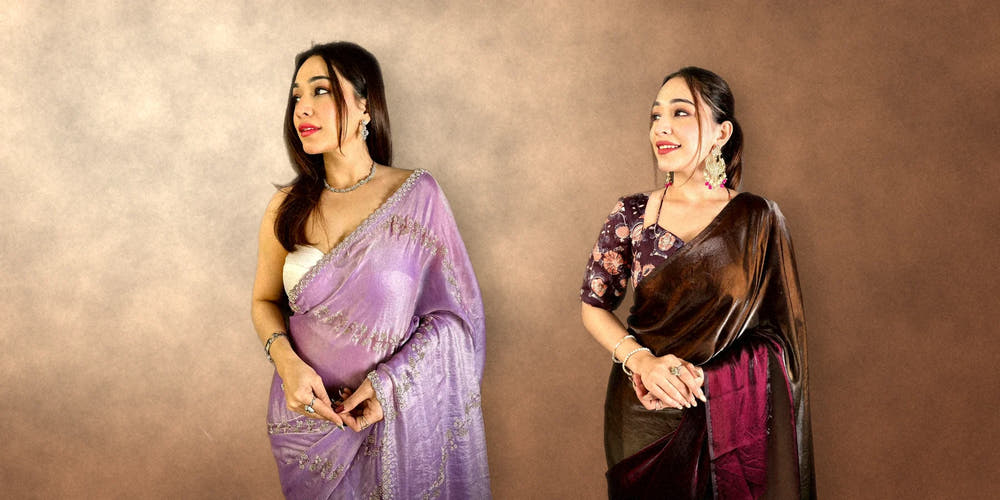
Shop Silk Sarees
 Off White Ethnic Motif Silk Blend Saree
₹ 1,995
 White Soft Silk Pashmina Kashmiri Print Saree
₹ 999
 Pink Bandhej Printed Dola Silk Saree
₹ 750
 Soft Silk Pashmina Kashmiri Print Saree
₹ 999
 Baby Pink Soft Silk Kanjivaram Saree
₹ 1,550
 Sky Blue Pochampally Patola Soft Silk Saree
₹ 1,050
 Cream White Soft Silk Gadwal Checked Saree with Zari Border
₹ 1,250
 Purple Dola Silk Pen Kalamkari Print Saree
₹ 750
A pashmina silk saree is a saree with the soft, slightly warm, wool-like feel that people associate with pashmina, usually made in silk or a silk-rich blend. It drapes more easily than a heavy shawl-weight fabric and suits winter weddings, parties and festive evenings.
The name is used loosely in the market, so it helps to know the story behind it. Below we explain where pashmina comes from, how this saree feels, how to check what you are buying and how to style it through the cold months.
What is a pashmina silk saree?
A pashmina silk saree takes its name from pashmina, the famously fine, soft fibre that has long been woven into shawls. The saree version aims for the same gentle, cosy hand, but with silk in the mix so that the fabric falls like a saree should, with pleats that sit neatly and a pallu that flows.
In everyday shopping, the term is a description of feel and look as much as a strict fibre label. Some sarees sold this way are silk, some are silk blends, and some are very fine wool-like weaves. That is why reading the product description matters, and we come back to it further down.
Think of it as a winter-friendly cousin of the silk saree: richer in texture, a little softer to the touch, and more comfortable on a cold evening than a crisp, light fabric.
Where does the name pashmina come from?
The word pashmina is linked with Kashmir and the Himalayan region, where the fibre has traditionally been combed from the fine undercoat of mountain goats. The fibre is prized because it is very fine, light and warm, which is why it became the classic material for shawls and wraps.
Over time, the word has travelled well beyond shawls. Today you will hear pashmina saree used for sarees that echo that soft, warm character, and the Kashmir connection often shows up in the designs too: paisley, floral jaal and delicate embroidery are common companions.
If you enjoy this kind of craft story, our Craft Stories collection is a good place to read about other weaves, and we have written about winter looks in our guide to winter saree styling with jackets, capes and shawls.
How does it feel and drape?
The first thing most people notice is the softness. The fabric feels smooth and slightly brushed against the skin, with a gentle warmth that a plain, thin weave does not give. It does not feel stiff or scratchy when it is well made.
The drape sits somewhere between a soft silk and a light wool. Pleats hold their shape without much fuss, and the pallu falls in rounded folds rather than sharp ones. Because the fabric has some body, it also hides small creases better than very fine fabrics do.
Here is how it compares in feel with a few familiar fabrics:
- Against a crisp organza: softer, warmer and less see-through, with a more relaxed fall.
- Against a heavy brocade: lighter to carry and easier to pleat, though less stiff and structured.
- Against a cotton saree: more luxurious in texture and better suited to evenings and cold weather.
- Against a raw silk saree: smoother and less textured, with a gentler, more fluid fall.
How to identify a pashmina silk saree before you buy?
Since the label is used in different ways, a few simple checks help you know what you are getting. None of them replaces a clear fibre description from the seller, but together they give a good picture.
Start with the product details. A trustworthy listing names the fabric plainly: silk, silk blend or another fibre. A blend is a blend, and it should be described as one. If the page only says pashmina style with no fibre named, ask before you decide.
Then look at the saree itself, in photographs and, once it arrives, in your hands.
- Touch: it should feel soft and smooth, never rough, scratchy or sticky.
- Weight: it usually feels light but with some body, not papery and not heavy like a bridal brocade.
- Warmth: it feels a little warmer against the skin than thin, glossy fabrics.
- Drape: the pleats fall in soft folds and the pallu moves easily.
- Finish: borders and motifs should lie flat, with no puckering or loose threads.
How do you style a pashmina saree for winter?
The charm of a pashmina saree for winter is that the fabric already does half the work. It looks rich, so you can keep styling simple and let the texture stand out.
For a winter wedding, choose deep jewel shades such as wine, emerald, mustard or navy, and pair them with a fitted full-sleeve blouse. Full sleeves keep you warm and give a polished line. A high-neck or boat-neck cut works well with softer fabrics because it keeps the look elegant and covered.
For an evening party, add a contrasting stole or a short embroidered jacket over the blouse. A structured velvet or brocade blouse in a matching shade adds depth without making the outfit feel heavy.
Jewellery should be kept balanced. If the saree has embroidery or a patterned border, a pair of jhumkas or a slim choker is enough. If the saree is plain, you can go bolder with a statement necklace. Our guide to jewellery pairing ideas for every saree type has more suggestions.
For a daytime festive look, drape the pallu a little looser and let it fall over the shoulder in soft folds, then add closed shoes or low heels and a light shawl for the outdoor chill.
How do you care for it so it stays soft?
Soft fabrics reward gentle handling. Check the care label first, because a silk blend and a wool-like weave may need different treatment. When in doubt, dry cleaning is the safest choice for a saree you want to keep for years.
If the label permits hand washing, use cool water and a mild detergent, do not wring or twist, and dry the saree flat in the shade. Direct sun can fade colours and dull the softness of the fabric.
For storage, fold the saree loosely in a muslin or cotton cloth and refold it along different lines every few months to avoid permanent creases. Keep it away from damp corners. Our saree storage guide explains how to fold every fabric, and the silk care post covers washing at home.
What else should you consider when choosing one?
Think about where and when you will wear it. A pashmina silk saree is at its best in cooler months, indoors and in the evening. In very warm weather, a lighter silk or cotton blend will be more comfortable.
Compare it with other silk options to find your fit. If you like a slightly textured, earthy feel, look at raw silk sarees. If you want something breathable that still has a silk sheen, silk cotton sarees are worth a look. For naturally woven character, our handloom sarees collection shows how varied hand-woven fabrics can be.
Finally, shop with some reassurance. Vastranand offers returns within 22 days of delivery, and orders are packed in 2 to 3 days with about 4 to 5 days on the way. If you are unsure about a fabric, the team can be reached on +91-8154000063 or at contact@vastranand.in, Monday to Saturday, 9 am to 9 pm.
Read next
Frequently asked questions
Is a pashmina silk saree the same as a pure pashmina saree?
Not always. Pashmina is a fine wool-like fibre, while a pashmina silk saree usually describes a soft, warm saree made in silk or a silk blend. The term is used loosely, so read the fabric details on the listing to see exactly which fibres were used.
Can I wear a pashmina saree for winter weddings?
Yes, it suits winter weddings very well. Choose a deep colour, a full-sleeve blouse and a light stole or jacket for the evening chill. The soft fabric looks rich on its own, so simple jewellery is usually enough for guests.
How can I tell if a saree really feels like pashmina?
Check the touch first: it should feel soft, smooth and slightly warm, never rough or sticky. It should have a little body but fall in gentle folds. Most importantly, look for a clear fibre description and ask the seller if anything is unclear.
Does a pashmina silk saree need dry cleaning?
Dry cleaning is the safest option, especially for blends and embroidered sarees. If the care label allows hand washing, use cool water and mild detergent, avoid wringing, and dry flat in the shade. Always follow the label on your saree.
Shop sarees from this story
Off White Ethnic Motif Silk Blend Saree
₹ 1,995
White Soft Silk Pashmina Kashmiri Print Saree
₹ 999
Pink Bandhej Printed Dola Silk Saree
₹ 750
Soft Silk Pashmina Kashmiri Print Saree
₹ 999
Baby Pink Soft Silk Kanjivaram Saree
₹ 1,550
Sky Blue Pochampally Patola Soft Silk Saree
₹ 1,050
Cream White Soft Silk Gadwal Checked Saree with Zari Border
₹ 1,250
Purple Dola Silk Pen Kalamkari Print Saree
₹ 750 Radiant Harmony Katan Silk Saree
₹ 999
 Black and White Check Katan Silk Saree with Gold Zari Border
₹ 999
Watch these sarees in motion
Loved this story? The sarees behind it are waiting for you — handcrafted, factory-direct, delivered across India.
Shop best sellers ← Back to The Vastranand Journal