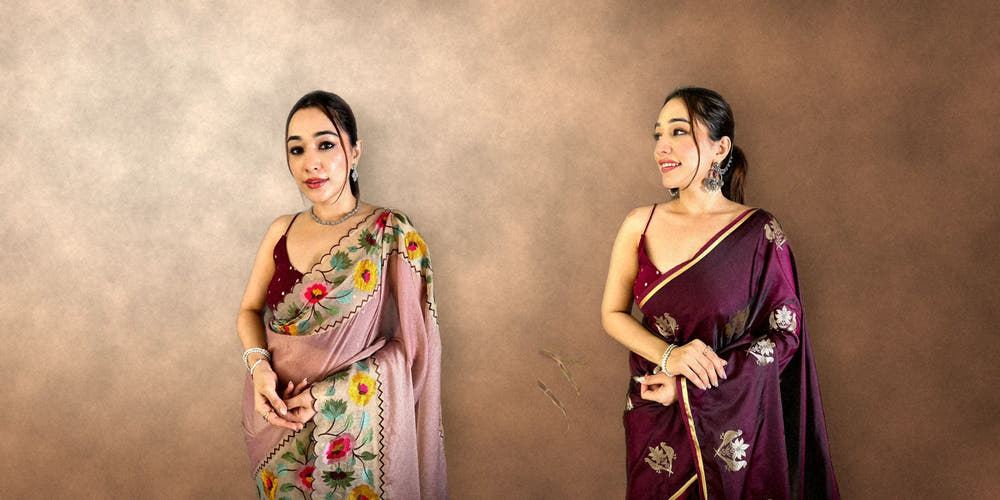
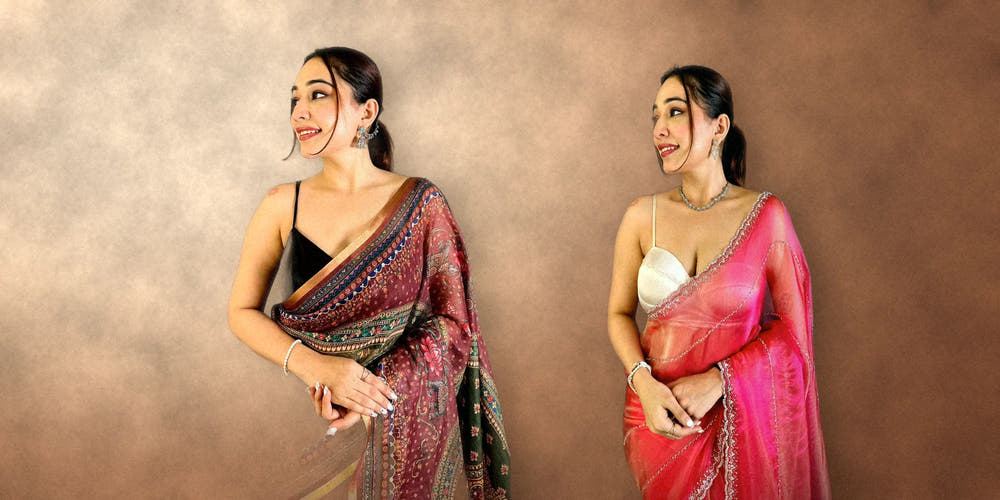
Shop Festive Sarees
 Off White Ethnic Motif Silk Blend Saree
₹ 1,995
 White Soft Silk Pashmina Kashmiri Print Saree
₹ 999
 Pink Bandhej Printed Dola Silk Saree
₹ 750
 Soft Silk Pashmina Kashmiri Print Saree
₹ 999
 Baby Pink Soft Silk Kanjivaram Saree
₹ 1,550
 Sky Blue Pochampally Patola Soft Silk Saree
₹ 1,050
 Cream White Soft Silk Gadwal Checked Saree with Zari Border
₹ 1,250
 Peach Ombre Chinnon Chiffon Floral Print Saree with Pink Pallu
₹ 750
Before buying varamahalakshmi silks, know the occasion, pick a silk you can wear comfortably for several hours, choose auspicious colours and a clear border, and check fabric details, delivery timing and the return policy. A little planning keeps the puja day calm and your saree looking its best.
Varamahalakshmi Vratham is a day of prayer, family and festive dressing, so the saree you choose has to look rich and also feel easy to wear. This guide walks you through each decision, from silk type to blouse planning, so your varamahalakshmi silks online shopping feels simple and unhurried.
What should I know before buying varamahalakshmi silks?
Start with three questions: how long will you wear it, how heavy do you want it to feel, and what will you do in it? The puja involves sitting, standing, serving guests and moving around the house. A very heavy saree can tire you by afternoon, while a soft, well-draped silk stays comfortable.
Next, think about whether this is a saree you will wear again. Many families like a silk that works for the vratham and also for weddings, temple visits and other festivals. A saree with a balanced border and a colour you love will earn more wear than one chosen only for a single day.
Finally, read the product page closely. Look at the fabric description, the border and pallu details, the blouse piece and the care notes. If anything is unclear, contact the shop before you order rather than guessing.
- Decide how long and in what setting you will wear it
- Choose weight and drape you can manage comfortably
- Think about repeat wear beyond the puja
- Read fabric, border, pallu and blouse details carefully
Which silk types suit the Varalakshmi puja?
Silk is the traditional choice for this festival, and there are several kinds to consider. Our silk sarees collection is a good place to see the range in one view, and you can then narrow down by weave, finish and budget.
Soft silk drapes smoothly and is easier to manage through a long day. Raw silk has a slightly textured, crisp look that holds pleats well and suits a structured drape. Dola silk is known for its gentle sheen and flowing fall. Each has its own character, so choose by how you like a saree to feel.
If you love the look of a South Indian temple-border saree, remember that a craft named after a place is only truly that craft when it is made there. Check the product description to see exactly what the saree is, and whether it is a style inspired by a weave or the weave itself.
- Soft silk: smooth drape, easier for long hours
- Raw silk: textured look, holds pleats neatly
- Dola silk: gentle sheen and flowing fall
- Check whether a product is a style or the original craft
Which colours are right for Varamahalakshmi silks?
Many families lean towards red, maroon, yellow, green, orange and gold-toned sarees for this festival, as these colours feel auspicious and festive. There is no single rule, and family custom matters most. If your household follows a particular colour tradition, honour that first.
If you are choosing a colour that flatters you, hold the saree near your face in daylight. Warm skin tones often glow in deep reds, mustards and rich greens, while cooler tones can look lovely in wine, emerald or soft pink. Our guide to saree colours for every Indian skin tone can help you decide.
A contrast border adds drama, while a tone-on-tone border feels quiet and elegant. Think about your jewellery too. Gold looks beautiful against most festive silks, so a border with gold zari tends to tie the whole look together.
- Follow family custom on colour first
- Test the shade near your face in daylight
- Contrast border for drama, tone-on-tone for calm
- Match zari tone with the jewellery you plan to wear
How do I shop for varamahalakshmi silks online with confidence?
Online shopping works best when you slow down and check the details. Colours can look different on each screen, so read the colour name, look at every photo and zoom in on the border, pallu and weave. Compare the blouse piece details too, since a good blouse fabric makes the whole outfit.
Plan your timing. At Vastranand, orders are packed in 2-3 days and then take 4-5 days on the way, so allow for that along with time for a blouse to be stitched. Ordering early leaves room for fitting and any alterations before the festival.
Know the return policy before you pay. Returns are accepted within 22 days of delivery, which gives you time to check the saree in natural light and with your blouse. If you are shopping on a budget, our silk sarees under 1500 collection lets you browse by price comfortably.
- Zoom into photos and read the colour name
- Check blouse piece details
- Allow 2-3 days packing and 4-5 days on the way, plus stitching time
- Returns accepted within 22 days of delivery
Should I buy a wedding-grade silk or a lighter one?
It depends on how you plan to use it. A heavier, richly bordered saree suits families who want a grand look and will wear it again at weddings. Our silk sarees for wedding collection shows the more elaborate end of the range.
A lighter silk suits those who want to feel at ease while hosting. You can still look polished by choosing a good border and a neat drape. Comfort often matters more than weight of zari on a day filled with rituals and guests.
If you like a textured, earthy look, our raw silk sarees are worth a look. They pair well with simple gold jewellery and a traditional hairstyle.
- Heavier silk: grand look, strong repeat use at weddings
- Lighter silk: easier for hosting and moving around
- Raw silk: textured, earthy finish
How do I care for my silk after the festival?
Good care keeps a silk beautiful for years. Air the saree for a short while after wearing it, away from direct sunlight, before folding it. Avoid spraying perfume directly on the fabric, as it can leave marks.
For storage, wrap the saree in a soft cotton or muslin cloth and refold it along different lines every few months so the creases do not set. Our guide on how to wash and store a silk saree at home covers the steps in more detail.
For stains or heavy dirt, a trusted dry cleaner is the safer choice. Always follow the care notes on the product page.
- Air the saree before folding
- Keep perfume off the fabric
- Store in soft cotton or muslin
- Refold along new lines now and then
Read next
Frequently asked questions
What should I check first when buying a saree for Varamahalakshmi?
Check the occasion and comfort first. Think about how long you will wear it, then look at the fabric, colour, border and blouse details on the product page. Finally, confirm delivery time and the return policy so you can order with confidence.
Is red the only colour for Varamahalakshmi Vratham?
No. Red, maroon, yellow, green, orange and gold tones are popular, but family custom matters most. If your household has no fixed rule, choose a festive shade that suits your skin tone and that you will enjoy wearing again.
How early should I order a saree for the puja?
Order early. At Vastranand, orders are packed in 2-3 days and take 4-5 days on the way. Add time for blouse stitching and any alterations, so you are not rushing in the days before the festival.
Can I return a silk saree if it does not suit me?
Vastranand accepts returns within 22 days of delivery. Check the saree in natural light with your blouse soon after it arrives, and contact the shop if you have any concern about it.
Can I wear the same silk saree again after the festival?
Yes, and it is a smart way to choose. A silk with a balanced border and a versatile colour works for weddings, temple visits and other festivals, so you get many wears from one thoughtful purchase.
Shop sarees from this story
Off White Ethnic Motif Silk Blend Saree
₹ 1,995
White Soft Silk Pashmina Kashmiri Print Saree
₹ 999
Pink Bandhej Printed Dola Silk Saree
₹ 750
Soft Silk Pashmina Kashmiri Print Saree
₹ 999
Baby Pink Soft Silk Kanjivaram Saree
₹ 1,550
Sky Blue Pochampally Patola Soft Silk Saree
₹ 1,050
Cream White Soft Silk Gadwal Checked Saree with Zari Border
₹ 1,250
Peach Ombre Chinnon Chiffon Floral Print Saree with Pink Pallu
₹ 750 Mustard Poly Chiffon Diamond Stone Work Saree
₹ 1,050
 Regal Freehand Abstract Chinnon Saree
₹ 1,050
Watch these sarees in motion
Loved this story? The sarees behind it are waiting for you — handcrafted, factory-direct, delivered across India.
Shop best sellers ← Back to The Vastranand Journal